Amazon sellers spend plenty of time thinking about ad costs, storage fees, and margins. They study product rankings, watch return rates, and try to keep inventory moving without tying up too much cash. Yet one of the more practical ways to lower fulfillment costs often gets overlooked entirely. It is not a flashy tactic. It is not a software trick. It is a warehousing decision.
More specifically, it is the decision to work with a fulfillment partner operating from a state tax-exempt warehouse environment while also handling the hands-on prep work Amazon requires. For sellers trying to scale without getting buried in avoidable costs, that setup changes the economics in a very real way.
1. Tax savings start before the box ever reaches Amazon
A lot of sellers think fulfillment costs begin with shipping labels and Amazon fees. In practice, those costs start much earlier, when inventory is received, stored, sorted, labeled, bundled, and prepared for outbound movement. That is where location matters.
A tax-exempt warehouse model gives sellers a chance to reduce state sales tax exposure on inventory storage and distribution, depending on how their operation is structured. For brands moving meaningful volume, that can create real savings over time.
That detail matters more than many sellers realize. A lower operating base does not just save money on paper. It creates room for healthier margins, more flexible pricing, or more reinvestment into inventory and growth.
2. FBA prep services turn a warehouse into a working cost-control system
A warehouse only saves money if it also helps inventory move correctly and efficiently. That is where fba prep services become part of the strategy rather than a separate expense.
Amazon requires sellers to meet specific prep and compliance standards. Items need to be inspected, labeled, packaged properly, and sent into the network in a format Amazon accepts. A good prep partner is not just adding labor. It is reducing mistakes, delays, rejected shipments, and rework.
The strongest providers build that into one workflow, such as handling inspection, packaging, labeling, bundling, insert removal or addition, and protective prep such as poly bagging or bubble wrapping, all in one place. They emphasizes Amazon-compliant processes, scalable operations, and direct forwarding into Amazon’s fulfillment network.
That combination is what makes the model attractive. Sellers are not paying one vendor for storage, another for prep, and then losing time coordinating both. They are simplifying the path from inbound inventory to Amazon-ready shipment.
3. The real benefit is fewer hidden fulfillment leaks
Most fulfillment waste does not show up as one dramatic charge. It shows up in small leaks that add up fast. A seller sees:
- extra labor from relabeling inventory
- chargebacks tied to compliance mistakes
- delayed check-ins from poorly prepared shipments
- returns linked to packaging damage
- staff time lost coordinating multiple vendors
- freight inefficiencies from fragmented handling
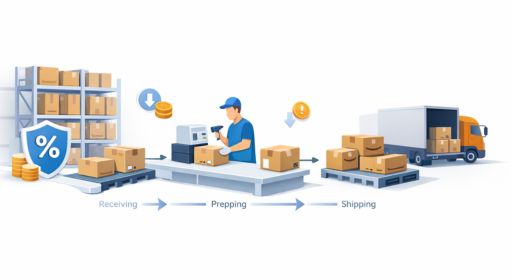
None of these feels unusual on its own. Together, they chip away at profit every month. A warehouse partner that receives, inspects, labels, bundles, and stages products for Amazon in one facility reduces handoff points. Fewer handoffs usually mean fewer errors. That is one reason integrated 3PL models tend to feel smoother for growing brands.
A partner to look for highlights quality control inspections, SKU-level prep steps, and rapid turnaround, typically within 24 to 48 hours depending on volume and complexity. It also notes short-term and long-term storage with real-time visibility and low-stock alerts. That kind of visibility matters because fulfillment problems are rarely cheap once they become urgent.
4. Amazon sellers often outgrow DIY prep before they admit it
Many brands start by doing prep in-house. At the beginning, that makes sense. Founders want control. Volume is manageable. The business still feels close enough to touch. Then growth changes the math.
The same team that once packed a few cartons now has to manage pallet receipts, labeling standards, bundle assembly, storage, reorder timing, freight coordination, and Amazon compliance windows. At that point, in-house prep stops being lean and starts becoming distracting. This is where outsourced prep becomes less about convenience and more about discipline. A strong prep operation gives sellers:
- a repeatable receiving process
- consistent product inspections
- organized labeling and packaging workflows
- faster turnaround into Amazon or FBM channels
- more time to focus on purchasing, marketing, and sales
A good partner will position its FBA and FBM offering as scalable for sellers handling anything from small shipments to very large unit counts, with integrations tied to Amazon Seller Central and other software tools. That matters because the goal is not to remove visibility from the seller. It is to remove chaos.
5. The warehouse strategy works best for sellers with complex inventory
Not every Amazon business has the same needs. Some ship simple, single-unit products with minimal prep. Others deal with fragile items, multi-packs, kits, inserts, seasonal promotions, or SKU variations that create a lot more handling work. Those are the sellers who often feel the biggest difference from a tax-advantaged, prep-focused warehouse model.
Complex inventory creates friction. It demands more labor, more quality checks, and better organization. If those tasks happen in a facility designed for that work, the operation runs cleaner. If they happen in a cramped back room or through a patchwork of vendors, costs rise fast. This is especially true for sellers that need:
Bundling and multi-pack preparation
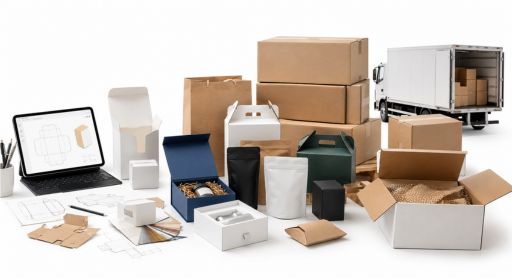
A prep services partner specifically notes in-house bundling, multi-pack creation, kitting, and custom packaging support for ecommerce and wholesale workflows.
Amazon compliance support
The company also emphasizes FNSKU, UPC, and custom labeling, along with compliance-focused prep intended to avoid delays and penalties.
Storage plus distribution in one place
Its broader 3PL offering includes inventory management, pick-pack-ship support, freight coordination, and nationwide distribution from a strategically located facility. For sellers juggling these moving parts, the warehouse itself becomes part of the margin strategy.
6. Freight savings improve when prep and warehousing are aligned
Fulfillment costs are never just about what happens inside the building. Freight plays a major role too. When prep is disconnected from warehousing, sellers often end up with inefficient outbound movement. Inventory gets split, shipments are staged late, and carrier options narrow because operations are reactive instead of planned.
A more coordinated 3PL model improves that. A prpe says its freight management offering uses shipping volume and carrier relationships to negotiate better pricing and optimize delivery methods across parcel, LTL, FTL, and broader logistics channels.
That matters because freight savings are often won through consistency, not heroics.
When products are already in the right warehouse, prepped correctly, and ready on schedule, shipping decisions get smarter. That lowers stress and often lowers total landed cost.
7. Seller account health improves when prep quality stays high
Not every fulfillment cost sits on an invoice. Some show up in account strain.
Amazon sellers pay for poor prep through delayed receiving, damaged units, customer complaints, and operational fire drills. A shipment that arrives noncompliant or poorly packaged can ripple through the business long after the cartons leave the dock.
That is why quality control deserves more attention in the warehouse conversation.
Top FBA prep services repeatedly frames inspection and accuracy as core parts of its process, including defect checks on receipt and prep steps designed to reduce return rates and protect seller account health.
For a growing seller, that is not a minor detail. Cleaner prep supports smoother receiving. Smoother receiving supports inventory availability. Inventory availability supports sales momentum. It is all connected.
8. The best savings often come from combining simple advantages
There is no single warehouse trick that solves every fulfillment problem. What works better is stacking practical advantages that reinforce each other. A strong setup combines:
- tax-exempt warehousing benefits
- Amazon-ready prep workflows
- accurate inspections and labeling
- scalable storage
- freight coordination
- software visibility
- fast turnaround
Each one helps a little. Together, they can materially change how a business operates.
That is the real lesson behind this strategy. It is not just about storing goods in the right state. It is about choosing a partner that treats prep, storage, compliance, and shipping as parts of the same system. FBA prep services presents exactly that kind of all-in-one 3PL model, with tax-exempt warehousing, integrated FBA/FBM prep, inventory visibility, and shipping support designed for ecommerce growth.
9. Why more Amazon sellers are paying attention now
This strategy is getting more relevant for a simple reason. Margins are tighter. Brands do not have as much room to absorb avoidable costs. They need fulfillment operations that are efficient without becoming rigid, scalable without becoming impersonal, and detail-oriented without slowing everything down.
That is why the tax-exempt warehouse model deserves more attention than it gets. It gives sellers a practical way to reduce operating drag while improving the daily mechanics of prep and distribution.
For Amazon brands that are growing past the DIY stage, that can be the difference between a fulfillment setup that constantly needs fixing and one that quietly supports the business every day. In the end, the smartest warehouse strategy is rarely the loudest one. It is the one that lowers costs, keeps inventory moving, and makes the rest of the business easier to run.
Conclusion:
In an increasingly competitive Amazon marketplace, sellers can no longer afford to overlook the operational side of their business. Leveraging FBA prep services in tax-exempt warehouses provides a smart, practical way to reduce fulfillment costs while improving efficiency and accuracy. By combining tax advantages with integrated prep, storage, and shipping workflows, sellers can eliminate costly errors, streamline inventory movement, and free up valuable time to focus on growth. As margins tighten and operations become more complex, adopting this all-in-one approach is not just a cost-saving tactic—it is a strategic move toward building a more scalable, resilient, and profitable Amazon business.