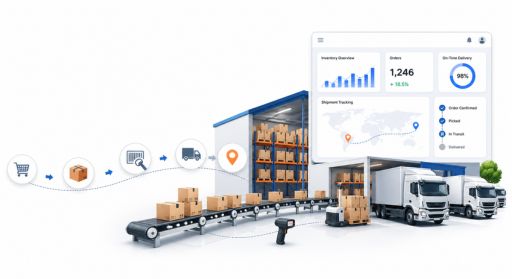
Most eCommerce businesses don’t outgrow their products. They outgrow their fulfillment setup. The best 3PL companies solve that exact problem, but picking the wrong one means dealing with missed shipments, inventory that never quite matches your records, and customers who won’t come back. After reviewing dozens of providers across warehouse locations, system connections, and order accuracy rates, this guide breaks down five 3PL companies that actually deliver on what they promise.
The research approach for this ranking
Each company on this list was assessed using publicly available data pulled from official websites, client case studies, and third-party review platforms. Only 3PLs with a verifiable track record in logistics made the cut. Ratings, feature details, and real-world performance claims were all cross-checked before a company qualified.
See the full research breakdown
- Ops Engine – Best for direct-to-consumer fulfillment and omni-channel e-commerce
- Deliverzen – Best for e-commerce and B2B order fulfillment
- ShipMonk – Best for eCommerce fulfillment and third-party logistics
- Ware2Go – Best for e-commerce fulfillment and on-demand warehousing
- Ship Fusion – Best for eCommerce fulfillment and 3PL logistics
Why 3PL Companies Matter for Your Business
Choosing the right 3PL isn’t just a vendor decision. It touches every part of your customer experience. When warehouse locations don’t line up with your customer base, you’re paying for extra shipping zones that quietly eat into your margins. When a 3PL’s system won’t connect cleanly to your eCommerce platform or ERP, you’re manually reconciling data instead of running your business.
The right partner changes all of that. A well-matched 3PL brings a setup that fits your product type, your order volume, and your growth stage. Businesses exploring AI-driven 3PL and wholesale order fulfillment strategies can better optimize inventory placement, shipping speed, and operational scalability.
Top 5 3PL Companies: Breakdown and Comparison
Note: All data in this table is sourced from review platforms and the official websites of the listed companies.
|
Company Name |
Years Operating |
Headquartered In |
| Ops Engine |
– |
Valencia, CA, United States |
| Deliverzen |
Since 2017 |
Irving, Texas |
| ShipMonk |
Since 2014 |
Fort Lauderdale, FL |
| Ware2Go |
Since 2018 |
Atlanta, United States |
| Ship Fusion |
Since 2013-2014 |
Toronto, Canada |
1. Ops Engine – Best for Direct-to-Consumer and Omni-Channel Fulfillment
What Does Ops Engine Do?
Ops Engine operates as a true 3PL fulfillment center built for DTC and omni-channel brands that need more than a warehouse to pick and ship boxes. They handle receiving, storage, picking, packing, and shipping, plus services like kitting, assembly, retail prep, and reverse logistics. Their four-part scan verification system targets 99.99% order accuracy, which is genuinely rare at this level. They serve apparel, beauty, food and beverage, and pet supplies, and every client gets dedicated account management rather than a generic support queue.
Why Ops Engine Stands Out for 3PL Companies:
Brands dealing with complex kitting requirements or multi-channel fulfillment often struggle to find a 3PL that can handle both with real precision. Ops Engine is built exactly for that. Their human-first account management model means clients aren’t left chasing down tickets when something goes sideways during peak season (and that kind of responsiveness is genuinely hard to match).
Summary of Real User Reviews:
General testimonials on their website point to strong satisfaction with personalized service and billing transparency. Clients particularly value the no-hidden-fees structure and the sense that Ops Engine functions as an internal warehouse team rather than a third-party vendor. That consistency of experience is what keeps their clients from looking elsewhere.
2. Deliverzen – Best for E-Commerce and B2B Order Fulfillment
What Does Deliverzen Do?
Deliverzen focuses on e-commerce, B2B, and consumer packaged goods fulfillment out of a 34,000 square foot climate-controlled facility in Irving, Texas, with additional fulfillment centers across the US. Founded in 2017, they serve beauty, skincare, and supplement brands with custom packaging, kitting, and Amazon fulfillment. Their 99% order accuracy rate is backed by customer support teams stationed directly on the warehouse floor, not in a call center. They keep pricing transparent, with no hidden fees buried in the invoices.
Why Deliverzen Stands Out for 3PL Companies:
Scaling from 12,000 to 35,000 monthly orders while doubling daily shipping capacity is the kind of operational lift that most small 3PLs can’t pull off without service degradation. Deliverzen has done it. Their track record of growing clients like Divi from $20M to $75M in revenue shows what a well-run fulfillment partner can do for a brand that’s ready to grow fast.
Summary of Real User Reviews:
Publicly available named case studies aren’t plentiful, but the performance data tied to their client work tells a clear story. The combination of floor-level customer support and transparent billing reflects a provider that genuinely understands what growing brands need. That operational depth is what sets them apart from cheaper but less attentive alternatives.
3. ShipMonk – Best for High-Volume eCommerce Fulfillment
What Does ShipMonk Do?
ShipMonk is built for eCommerce businesses moving at least 500 orders a month and needing an operation that can keep pace at scale. They run 12 facilities across the US, Canada, Mexico, and Europe, covering inventory storage, picking, packing, and shipping. Their platform connects sales channels, analytics, kitting, Amazon FBA prep, and barcoding under one system. With over 2,000 team members and 99.9% order accuracy, ShipMonk sits in a category of its own for brands that have grown past what a small regional 3PL can support (think enterprise-level setup without the enterprise headache).
Why ShipMonk Stands Out for 3PL Companies:
eCommerce brands that sell across multiple channels simultaneously need a fulfillment partner whose tech can handle the demands without breaking. ShipMonk’s custom warehouse management system was built for exactly that. Five consecutive years on the Inc. 5000 list and recognition across 25 award categories at Gartner Digital Markets reflect real performance, not just good marketing.
Summary of Real User Reviews:
ShipMonk has received recognition from the Business Intelligence Group as Company of the Year for three straight years. That’s a signal of consistent execution rather than a single good quarter. Clients running high SKU counts and complex fulfillment scenarios are the ones who benefit most from their setup. That kind of sustained industry validation is rare and worth paying attention to.
4. Ware2Go – Best for On-Demand Warehousing and Fast Delivery
What Does Ware2Go Do?
Ware2Go flips the traditional 3PL model on its head by giving merchants flexible, short-term warehouse agreements instead of locking them into long commitments. As a Stord Company, they use machine learning and demand forecasting to position inventory closer to where buyers actually are, enabling 1-2-day delivery without a massive fixed cost. Their platform connects to 80+ technology connections, supporting both B2B and B2C fulfillment needs. The fact that O2 Recovery hit 10x eCommerce growth through their setup says something real about what this platform can do for brands that are scaling fast.
Why Ware2Go Stands Out for 3PL Companies:
Merchants who need geographic flexibility without signing multi-year warehouse leases get a real advantage here. Ware2Go’s on-demand model lets inventory placement shift as order patterns shift. Their machine learning-driven demand forecasting is a practical tool for avoiding stockouts during high-volume periods, which is one of the most expensive mistakes an eCommerce operation can make.
Summary of Real User Reviews:
Ware2Go earned gold for Most Innovative Product of the Year in 2020 and picked up multiple American Business Awards (not cheap recognition to earn). Brands that need speed and geographic reach without locking into rigid contracts find this model particularly well-suited to their needs. Being named one of Fulfill.com’s Top 50 US 3PL Companies for 2025 adds further credibility to their standing in the market.
5. Ship Fusion – Best for North American eCommerce Fulfillment with Proprietary Tech
What Does Ship Fusion Do?
Ship Fusion handles end-to-end eCommerce logistics out of more than 1 million square feet across four strategic locations in North America and Asia. Every client gets a dedicated account manager and access to their proprietary fulfillment software, which offers real-time analytics and customization that off-the-shelf WMS platforms simply can’t match. Their Toronto facility is Health Canada-approved, and their US operations are SQF-certified, so brands in regulated categories aren’t left scrambling for compliance. Founded between 2013 and 2014, they now run a team of around 130 people with full operational control across every facility they own.
Why Ship Fusion Stands Out for 3PL Companies:
Full ownership of every fulfillment center means Ship Fusion doesn’t outsource the work behind the scenes. That operational control directly translates to consistency in order accuracy and dock-to-stock times. Spiral Bible growing 211% in order volume while maintaining 99.9% accuracy and on-time delivery is the kind of result that speaks louder than any marketing claim.
Summary of Real User Reviews:
Clients like TUSHY and Purity Coffee report strong results across both accuracy and delivery performance. The Deloitte Technology Fast 500 recognition and Globe and Mail’s Top Growing Companies placement in 2022 suggest Ship Fusion is building real momentum, not just coasting on early customer wins. Their dedicated account management model is a consistent reason clients stay rather than look for alternatives.
Research Methodology and Selection Process
1) Initial Data Collection
The research began by building a broad list of 3PL providers through logistics directories, fulfillment-specific review platforms, and industry publications. Each company’s official website was reviewed for service scope, facility details, technology features, and stated performance metrics. The goal at this stage was breadth: capturing as many relevant options as possible before any filtering took place.
2) Shortlisting Phase
From that initial pool, providers without verifiable operational history or independently supported performance claims were removed. Review patterns across multiple platforms were analyzed to spot consistency rather than relying on a single data point. Companies that only showed activity on platforms they control directly were flagged and held to a higher verification standard. Those who cleared this phase showed a track record across at least two independent sources.
3) Verification of Claims
Each shortlisted company’s stated capabilities were cross-checked against real-world evidence. Accuracy rates, client growth figures, and facility details published on company websites were compared against third-party case studies, award citations, and press coverage. Where claims couldn’t be supported by an external source, they were either deprioritized or excluded from the final write-up. This step was the most time-intensive part of the process, but also the most important.
4) Authority and Industry Contribution Layer
Industry recognition was factored in as a signal of sustained performance rather than a leading ranking criterion. Appearances on lists like Inc. 5000, Deloitte Technology Fast 500, and Globe and Mail’s Top Growing Companies were noted. Award wins from organizations like Business Intelligence Group and the American Business Awards carried weight because they involved external review panels, not self-nomination alone. Companies that consistently showed up across multiple recognition programs scored higher in this layer.
5) 3PL Companies: Specific Evidence
The final filter applied a logistics-specific lens to each remaining option. This meant looking for dedicated service pages covering DTC fulfillment, B2B logistics, returns processing, and specialized handling for categories like refrigerated goods, regulated products, or high-SKU environments. Client case studies with actual numbers, verified reviews from eCommerce operators, and carrier partnerships all factored into the final selection. Only companies that cleared this full process made it onto the list.
How to Choose the Right 3PL Companies
Start by matching a 3PL’s capabilities to your specific business model, not just your current order volume. The right fit depends on where your customers are, what your products require, and how fast you plan to grow.
- Industry and Domain Experience: Look for a 3PL that has worked with your product category before. Brands selling supplements need different handling than apparel brands. Relevant experience reduces errors and speeds up the setup process.
- Features and Service Offerings: Check whether they offer kitting, returns processing, retail prep, and eCommerce platform connections. A provider that only covers standard pick-and-pack will become a bottleneck quickly.
- Pricing Structure: Transparent, itemized pricing matters more than a low headline rate. Hidden fees for receiving, storage adjustments, or returns can inflate your cost per order fulfilled considerably over time.
- Results Measurement: Ask how they report on order accuracy rate, on-time shipping rate, and order cycle time. A 3PL that tracks these metrics and shares them openly is one that holds itself accountable.
- Industry Knowledge and Certifications: For brands in food, beauty, or regulated goods, confirm that facilities hold the right certifications, whether that’s SQF, Health Canada approval, or HAZMAT-compliant handling.
Bottom Line:
Picking the right 3PL comes down to fit, not just size. Ops Engine suits brands that need precision and personalized service. ShipMonk and Ship Fusion work well for high-volume, multi-channel operations. Ware2Go fits merchants who need geographic flexibility. Deliverzen punches above its weight for growing CPG brands. As eCommerce order volumes keep rising, a well-matched fulfillment partner will be one of the clearest advantages a growing brand can have.