Introduction
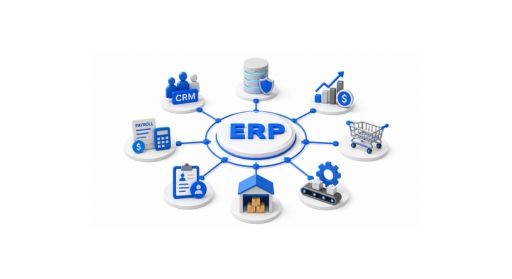
Many organizations implement an enterprise resource planning (ERP) system to improve efficiency, centralize data, and streamline operations. An ERP can accomplish all of those goals, but it cannot eliminate manual data entry on its own.
Most businesses rely on several business applications in addition to their ERP. Sales teams use CRM software. HR manages employee information in an HRIS. Payroll teams process payroll in dedicated payroll systems.
When applications operate independently, employees spend valuable time entering the same information into multiple systems. Teams copy customer records from the CRM into the ERP, update employee information in both HR and payroll systems, and import financial data into accounting software. Every manual update takes time and increases the likelihood of mistakes.
ERP integration eliminates repetitive work by automatically moving data between business applications. Integration automatically synchronizes information across connected systems, giving every department accurate, up-to-date data. Teams no longer have to maintain or reconcile duplicate records.
Why Manual Data Entry Creates Business Problems
Manual data entry creates more than an administrative inconvenience. It slows business processes, reduces productivity, and introduces unnecessary risk.
Employees lose valuable time whenever they enter the same information into multiple applications. Each task may only take a few minutes, but those minutes add up quickly across hundreds or thousands of transactions every month.
Manual processes also increase the likelihood of human error. Employees mistype customer information, overlook employee updates, select the wrong product codes, or upload outdated files. Small mistakes often create larger operational problems, including payroll errors, incorrect invoices, inventory discrepancies, delayed shipments, and inaccurate financial reports.
Disconnected systems also produce inconsistent data. Sales, finance, operations, and HR often maintain separate versions of the same information because employees update one system but forget another. Teams waste time reconciling reports instead of analyzing results, while executives struggle to determine which numbers they can trust.
Business growth only magnifies these challenges. Every new application introduces another system that employees must update manually unless the organization automates the process.
What Is ERP Integration?
ERP integration connects your ERP with other business applications so information moves automatically between systems.
For example, ERP with CRM integration automatically creates or updates customer records in the ERP whenever a salesperson adds or changes customer information in the CRM. ERP with payroll integration transfers payroll data into the ERP without requiring finance teams to import spreadsheets. Employees continue working in the applications they know best while integrations handle the repetitive work behind the scenes.
ERP integration automates data movement, reduces manual work, and keeps business information consistent across every connected application.
Benefits of EP Integration
Organizations that invest in automation improve business performance across every department.
Reduce Manual Data Entry
ERP integrations eliminate repetitive administrative work by moving information automatically between systems. Sales teams no longer enter customer records twice. HR teams stop updating multiple employee databases manually. Finance teams eliminate repetitive imports and exports. Employees spend less time maintaining systems and more time serving customers, solving problems, and supporting business growth.
Improve Data Accuracy
Automation improves data quality by reducing the chances of manual errors. Integration transfers information directly between systems without requiring employees to reenter data. Customer records remain consistent, employee information stays current, and financial transactions remain synchronized across applications. Better data helps every department work more efficiently because employees spend less time correcting mistakes and reconciling reports.
Accelerate Business Processes
Manual data entry slows nearly every business process. Employees cannot complete orders until they update customer records. HR teams cannot complete onboarding until they update every required system with employee information. Finance departments cannot close the books until accounting staff imports payroll data. ERP integration removes bottlenecks by moving information immediately after business events occur. Teams complete work faster as data reaches the right systems without delay.
Increase Employee Productivity
Most employees want to handle more rewarding tasks than spending hours copying information between software applications. ERP integration eliminates repetitive administrative work so employees can focus on higher value activities. Sales representatives build customer relationships. HR professionals improve the employee experience. Finance teams analyze business performance instead of manipulating spreadsheets. Automation helps employees contribute more value while reducing frustration.
Improve Reporting and Decision Making
Business leaders depend on accurate, consistent information to make informed decisions. Disconnected applications often generate conflicting reports because each system contains different data. Employees spend hours exporting spreadsheets, comparing numbers, and investigating discrepancies before leadership can trust the results.
ERP integration synchronizes business data across connected applications so reports reflect consistent information. Leaders gain greater confidence in their metrics and make faster, more informed decisions.
Deliver Better Customer and Employee Experiences
Accurate data benefits everyone. Sales teams process orders more efficiently because customer information already exists in the ERP. Customer service representatives access current information without switching between multiple systems. HR teams onboard employees faster because payroll and benefits systems receive employee data automatically. Finance teams process payroll with greater confidence because integrations keep employee records synchronized. Connected systems help organizations deliver smoother experiences for both customers and employees.
Conclusion
An ERP system delivers its greatest value when it connects to the rest of your business applications instead of operating as an isolated system. Organizations that rely on manual data entry waste valuable employee time, create unnecessary errors, and limit their ability to scale. ERP integrations solve these challenges by automatically synchronizing data across business systems, improving accuracy, accelerating business processes, and freeing employees to focus on rewarding work that drives growth. If your organization still relies on employees to manually update multiple applications every day, start by identifying the processes that consume the most time. Even a few high-impact HR workflow automations can improve efficiency and reduce costly errors across your business.