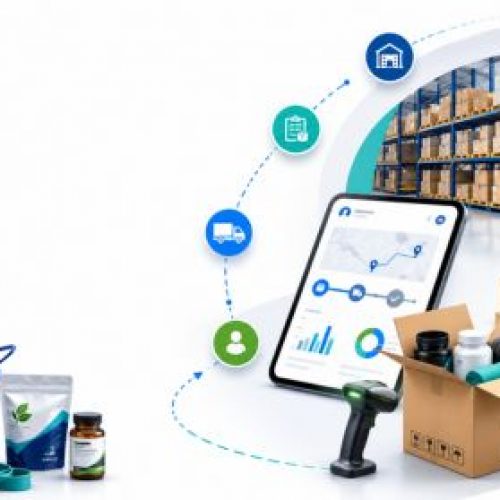
Fitness and wellness brands have a uniquely brutal fulfillment problem. The best 3PL companies for this space need to handle everything from heavy gym equipment to fragile supplement bottles, all while maintaining accurate inventory across multiple warehouse locations and surviving the chaos of New Year’s resolution season. After reviewing dozens of providers across case studies, review platforms, and official documentation, the patterns become clear fast. This guide covers five standout 3PL partners built for the real demands fitness and wellness brands actually face. How this ranking was put together Public information drove every decision here. Provider websites, verified customer case studies, review platform data, and directory listings were all examined to assess which companies had a real track record in logistics. Only providers with demonstrated experience handling fulfillment at scale made the cut. → See the full research breakdown Rush Order – Best for e-commerce and retail fulfillment Speed Commerce – Best for e-commerce order fulfillment and logistics ShipMonk – Best for DTC, B2B, and retail fulfillment for e-commerce businesses Fidelitone – Best for enterprise supply chain and third-party logistics Fulfyld – Best for e-commerce fulfillment and third-party logistics Why 3PL Companies Are Worth a Closer Look Fitness and wellness brands don’t get the luxury of slow seasons. Demand spikes hit hard around January, pre-summer, and product launch cycles, and a fulfillment partner that can’t scale with that volume creates real damage fast. Inventory accuracy is another pressure point. A brand selling protein powders, resistance bands, and foam rollers is managing dozens of SKUs with very different storage needs. One mislabeled shipment or stockout can cost repeat customers. The right 3PL handles these pressures without making you rebuild your entire tech stack. Providers with strong platform connections, real-time inventory visibility, and order accuracy rates targeting 99% or better protect on-time shipping rates and keep inventory shrinkage low. That kind of reliability is what separates good fulfillment from growth-enabling fulfillment. Comparing the 5 Best 3PL Companies Note: All data in this table is sourced from review platforms and the official websites of the listed companies. Company Name Years Operating Team Size Headquartered In Rush Order Since 1989 201-500 Gilroy, CA Speed Commerce Since 1983 1,609 Las Vegas, NV ShipMonk Since 2014 2,000+ Fort Lauderdale, FL Fidelitone Since 1929 501-1,000 Wauconda, IL Fulfyld Since 2016 Not disclosed Huntsville, AL Rush Order – Best for E-Commerce and Retail Fulfillment How Does Rush Order Operate? Founded in 1989, Rush Order runs a global fulfillment network spanning 13 locations across North America, Europe, Asia, and Australia. Their team handles everything from B2C order fulfillment to retailer EDI and full back-office support. For brands in the fitness and wellness space, their fitness product fulfillment services are built around same-day shipping for orders placed before 2pm and a multi-checkpoint barcode verification system that actively removes human error from the process. Real-time inventory visibility across all warehouse locations is baked into their platform. What Sets Rush Order Apart for 3PL Companies? The multi-checkpoint barcode verification approach tackles one of the most persistent problems in high-SKU fulfillment: picking errors that only get discovered after the package ships. Brands that have weathered demand surges (think pandemic-era spikes) and emerged with fulfillment intact tend to credit partners who can scale operations without sacrificing accuracy. What Users Are Actually Saying: From the case studies, clients experiencing sudden demand spikes cite Rush Order as the reason their operations didn’t fall apart. The Vogmask example during pandemic-driven volume surges stands out as a clear proof point of their ability to scale. Public reviews are limited, but the accounts that exist consistently highlight reliable, accurate fulfillment even under pressure. Speed Commerce – Best for E-Commerce Order Fulfillment and Logistics How Does Speed Commerce Operate? Speed Commerce has been running since 1983, which means they were handling fulfillment long before e-commerce was even a concept. Today they work across Pennsylvania, Ohio, Missouri, and Texas with fulfillment centers equipped with unit sortation, pick-to-pack conveyors, and radio frequency scanning. Their offering covers web platform development, order management, warehousing, kitting, assembly, and returns management, all connected through their own custom software platforms. For fitness brands with complex bundles or subscription box requirements, that kitting capability is worth paying attention to. What Sets Speed Commerce Apart for 3PL Companies? Rather than running every client through the same templated process, Speed Commerce builds customized fulfillment workflows using their proprietary software (not cheap, but worth it for brands with complex operations). That flexibility makes a real difference for wellness brands dealing with product variety, seasonal promotions, and retail partnerships all at once. What Users Are Actually Saying: Detailed public reviews for Speed Commerce are harder to find than for some newer providers, which isn’t necessarily a red flag given their 40-plus-year history and $135.8M in reported revenue. Honestly, a company that’s been operating since before the internet doesn’t usually need to chase review volume. Scale and client retention speak more than star ratings do. ShipMonk – Best for DTC, B2B, and Retail Fulfillment for E-Commerce Businesses How Does ShipMonk Operate? ShipMonk launched in 2014 and has grown fast enough to earn the “fastest-growing 3PL in America” label. They now operate 12 facilities across the US, Canada, Mexico, and Europe with a team of over 2,000 people, serving more than 1,000 customers. Their automated systems target 99.9% order accuracy, and their Virtual Carrier Network helps brands get competitive shipping rates without negotiating individually with carriers. For fitness brands scaling into retail while keeping their DTC channel running, ShipMonk’s dual-channel capability is a genuine advantage. What Sets ShipMonk Apart for 3PL Companies? The combination of advanced warehouse automation with a carrier network that actually moves the needle on shipping costs is what separates ShipMonk from providers that handle volume but not cost control.The combination of advanced warehouse automation with a carrier network that actually moves the needle on shipping costs is what separates ShipMonk from providers that handle volume but not cost control. Many of these trends are also discussed in AI, 3PL

Why Businesses Are Investing in Smarter Credit Management Solutions
Managing customer credit effectively has become increasingly important for businesses operating in competitive and unpredictable markets. Late payments, inconsistent cash flow, and rising financial risk can create serious challenges for finance teams, especially in B2B environments where invoices are often paid on extended terms. To improve financial visibility and reduce risk, many organisations are turning to modern tools such as Credit management software to streamline processes and strengthen collections performance. The Importance of Effective Credit Management Credit management involves assessing customer risk, monitoring outstanding balances, and ensuring payments are collected on time. A strong credit management process helps businesses protect cash flow while maintaining healthy customer relationships. Without clear systems in place, businesses may struggle with overdue invoices, payment disputes, and unpredictable revenue cycles. Poor Credit Control Can Impact Growth When businesses experience frequent late payments, it can affect daily operations, supplier payments, and future investment opportunities. Even profitable companies can encounter financial pressure if cash flow becomes inconsistent. This is particularly important for businesses with large customer bases or long payment terms. How Technology Is Changing Credit Management Traditional credit control methods often rely on spreadsheets, manual reminders, and fragmented communication between teams. Modern software solutions provide automation and real-time visibility that improve efficiency and reduce administrative workloads. Similar financial technology advancements are also shaping broader business operations, as explained in how fintech innovation is accelerating the cashless economy. Automation Reduces Manual Tasks Automated workflows can handle repetitive processes such as invoice reminders, payment tracking, and account monitoring. This allows finance teams to focus on higher-value activities instead of chasing overdue invoices manually. Automation also helps ensure communication remains consistent across all customer accounts. Real-Time Reporting Improves Decision-Making Access to accurate financial data allows businesses to identify risks earlier and make informed decisions more quickly. Businesses that struggle with poor-quality customer records often face additional challenges, as discussed in why B2B companies lose deals to messy customer data. Modern platforms often provide insights into: Outstanding invoice trends Customer payment behaviour Credit exposure Collection performance Risk analysis This visibility supports stronger financial planning and more effective account management. Improving Customer Relationships Through Better Processes Collections and credit control can sometimes create tension between businesses and clients. A more organised and transparent process helps reduce misunderstandings and maintain professionalism. Clear Communication Encourages Faster Payments Customers are more likely to pay on time when invoices, reminders, and payment terms are communicated clearly. Automated systems can send professional reminders at appropriate intervals without appearing aggressive. Flexible Payment Options Support Retention Some businesses use credit management systems to offer flexible payment arrangements or self-service payment portals. These features can improve customer satisfaction while helping businesses recover payments more efficiently. Reducing Financial Risk in Uncertain Markets Economic uncertainty has increased the need for stronger financial controls. Businesses must be able to assess customer risk accurately and respond quickly to changing conditions. Credit Monitoring Helps Prevent Problems Monitoring customer accounts regularly allows businesses to identify warning signs such as repeated late payments or increasing debt levels. Taking action early can reduce the likelihood of serious payment issues later. Data-Driven Decisions Improve Stability Businesses that use detailed financial insights can make more confident decisions around credit limits, payment terms, and account management strategies. This helps reduce exposure to bad debt while supporting long-term financial stability. FAQs: What is credit management software? Credit management software helps businesses manage customer credit, track invoices, automate collections, and monitor financial risk more efficiently. Why is credit management important? Strong credit management improves cash flow, reduces late payments, and helps businesses minimise financial risk. Can automation improve collections? Yes. Automation can send timely reminders, track overdue accounts, and reduce manual administrative work for finance teams. How does credit management software support customer relationships? Professional communication, clear payment processes, and flexible payment options help businesses maintain positive relationships while managing collections effectively. Is credit management software suitable for small businesses? Yes. Businesses of all sizes can benefit from improved visibility, automation, and financial control. Conclusion: As businesses face growing financial complexity and economic uncertainty, effective credit management has become more important than ever. Manual processes are often time-consuming and difficult to scale, particularly for organisations managing large volumes of customer accounts. Modern credit management solutions help businesses improve cash flow, reduce financial risk, and create more efficient collections processes. By combining automation, reporting, and clearer communication, businesses can strengthen financial stability while maintaining positive customer relationships.

Indoor VS Outdoor Signage Confusion: How Using the Wrong Material Damages Branding
Imagine a customer driving past your shop and seeing a faded, peeling sign. In just a few seconds, they might think your business is not doing well, even before they come inside. A worn-out sign can make your brand look careless or unprofessional. This usually happens because the wrong materials were used. Many businesses put indoor signs outside, where sunlight, rain, and wind wear them out quickly. The signs then need to be replaced often, which wastes both time and money. Understanding the difference between indoor and outdoor signage materials is a strategic branding decision. This article explores why using the wrong materials damages your brand, the key differences between indoor and outdoor options, and how to make smarter material decisions. What is indoor signage? Indoor signage is used inside places like offices, shops, malls, and exhibition halls. These signs help people find their way, share basic information, and create a good first impression of your business. You will often see indoor signage as reception signs, direction boards, wall graphics, banners, or display stands. Since people view these signs from close distance the designs are simple and clean. Common materials for indoor signage are foam board, acrylic, PVC, and vinyl. These work well indoors because they don’t face harsh conditions like direct sunlight, rain, or temperature extremes. Indoor signage is popular because it is affordable, easy to update, and looks good, helping the brand maintain a professional appearance. What is outdoor signage? Outdoor signage is what people notice first when they see your business from the street. It could be a shop front board, a building sign, or a roadside display. Its main job is simple. Get attention. Create trust. Bring people inside. Because these signs stay outside all day, they face harsh conditions. Strong sunlight. Heavy rain. Dust. Wind. Even heat and humidity. That is why outdoor signage must be made from tough, weather-resistant materials. Materials like aluminum, UV-protected acrylic, and outdoor-grade PVC are commonly used. They do not fade easily. They do not bend or crack quickly. Good outdoor signage does more than look nice. When made with the right materials, they can last 5-10 years or more with minimal maintenance. It protects your brand image. It tells customers your business is stable, serious, and worth trusting. Common confusions between indoor and outdoor signage A lot of businesses pick signage materials just because they look good or seem affordable. They don’t always think about where the sign will actually be placed. That is where the problem starts. One common mistake is putting indoor signs outside. At first, everything looks fine. But after some time, the sun fades the colors. Rain leaves marks. Wind weakens the surface. Before you know it, the sign starts looking worn and old. And this happens vice versa. Some businesses install heavy outdoor signage inside their shops or offices. These signs are made to be tough, but indoors that toughness is not really needed. And what happens is the sign can feel bulky and not match the space. These mistakes usually happen because of limited knowledge or trying to save money upfront. But in reality, the wrong choice leads to higher replacement costs and a weaker brand image. Choosing the right material from the start avoids these issues. It also keeps your signage looking professional for longer. How wrong materials damage your brand Your signage gives people a sense of what kind of company you run before they step inside. This message becomes negative when the wrong material is used. A faded or cracked sign makes a business look careless. Peeling surfaces and bent boards suggest poor quality. Customers may not stop to analyze every detail, but they notice these things. And they form opinions faster than we realize. If a sign looks cheap or poorly maintained, many people start to assume the same about the business. They question its professionalism and reliability. When this goes on for an extended period, it slowly deteriorates the trust in them. Wrong materials can also create visual confusion. Heavy outdoor-style signage inside a clean retail space can feel out of place. Lightweight indoor signage on an outdoor storefront can look weak and temporary. In both cases, the brand appears inconsistent. Using the wrong material also costs more over time. It gets damaged faster. It needs repair or replacement again and again. This means extra spending that could have been avoided. Choosing the right signage material is about keeping your business looking reliable and professional. Tips to choose the right signage material Think of how long the material will last: Some materials look fine at first, and after a few months, get fading. They don’t last so long. So it is good to spend extra on good material once rather than changing the sign again and again. Choose material based on where the sign goes: The right placement of signage matters a lot. Indoor and outdoor signs are not made the same way. Always choose the material based on whether the sign will be inside or outside. Appearance matters: The sign should match the style of your shop or office. If your shop or office looks clean and modern, the sign should also look neat and well-finished. A mismatched sign can spoil the overall look. Budget matters, but long-term: The cheapest option may seem fine at first. But low-quality signs lead to more spending later. Better quality replacements are needed more often. Think about daily weather impact: Outdoor signs are exposed to the sun, rain, wind, and dust every day. The material must be robust enough to withstand all these conditions, not fade, nor break easily. When in doubt, get expert help: For large signs or long-term installations, expert guidance will help. An expert in signage, such as Sun Sign & Technologies, can help you choose materials that suit your location and purpose. Conclusion: Your signage shows how much you care about quality and details. The difference between indoor and outdoor materials

Why B2B Companies Lose Deals to Messy Customer Data
Most B2B companies can point to the deals they won. Far fewer can see the ones they lost to something invisible: customer data that was scattered, duplicated, and out of date. It rarely shows up as the official reason a deal died. It shows up as a slow follow-up, a confused handoff, or an outreach that treated a long-time customer like a stranger. The common thread is that the business did not have a single, reliable picture of who it was dealing with. As a company grows and collects information from more places, that picture fractures, and the cost compounds quietly. How the Data Fractures A typical B2B company gathers customer and prospect information from many sources: its website, inbound inquiries, directories and listings, a CRM, email tools, and whatever the sales team adds by hand. Each source identifies a company in its own way. One records “Acme LLC,” another “Acme,” and another only a contact’s personal email. Nothing ties these together automatically. The result is that one real company exists as several disconnected records. Two salespeople can unknowingly work on the same account. A customer who already bought it gets marketed as a fresh lead. Reports count the same logo more than once. None of them looks like a data problem on the surface. It looks like a coordination problem, a marketing problem, or a service problem, all tracing back to the same fractured records. Why the Usual Fixes Fail The common responses do not hold. Cleaning the data by hand in a spreadsheet works for a week, until the next batch of inquiries rebuilds the mess. Buying another tool tends to add another silo, one more system with its own version of the customer. The business ends up with more software and no more clarity about who its customers actually are. The problem is not a shortage of tools or effort. It is that nothing reconciles the records into a single source of truth and keeps them reconciled as new information arrives. The Fix: One Resolved View The durable approach is to resolve the records a company already has into one reliable, current view of each customer and account and let every system reference it. Matching scattered records to the same real company is called entity resolution, and it is the foundation that decides whether everything built on top can be trusted. A layer built for this sits beneath the existing systems rather than replacing them, reconciling duplicates and exposing one resolved profile per company. A GTM Context Layer works on this principle, connecting fragmented records, so the same customer reads consistently across the business. Once that exists, sales stop tripping over itself; marketing reaches the right people, and reports finally reflect reality instead of inflated, double-counted numbers. Why It Matters More as B2B Adopts AI The stakes climb as B2B companies hand work to AI. An agent that drafts outreach, scores of leads, or routes of inquiries does not pause to question a duplicate or stale record. It acts on whatever it is given, instantly and at scale. Fragmented data does not just cause an occasional mistake. It causes them automatically, across the whole pipeline, before anyone notices. For B2B leaders, the lesson is to treat customer data as core infrastructure rather than a back-office chore. The companies that win consistently are not necessarily the ones with the biggest sales teams or the most tools. They are the ones whose systems agree on who their customers are. Get that foundation right, and fewer deals quietly slip away to problems no one ever names.

Deep Learning in Marketing: The Future of Campaigns
If you walk into a typical marketing agency today, you will hear a lot of noise about Artificial Intelligence. You will see teams using tools to generate rapid blog posts, draft basic email copy, or create striking images in seconds. There is a widespread industry belief that this generative efficiency represents the peak of the AI revolution in marketing. But while most of the market is hyper-focused on automating content creation, a much quieter—and far more lucrative—shift has already taken place. Deep learning has entered the marketing room. And the truth is, most agencies didn’t even notice. While generative AI focuses on output, deep learning focuses entirely on outcome. It is the invisible engine behind predictive analytics, dynamic pricing, and algorithmic ad bidding. For business leaders and executives, understanding the difference between surface-level AI utilities and true deep learning infrastructure is the ultimate key to unlocking real campaign intelligence. The Difference Between AI “Tools” and Deep Learning To understand why deep learning is a definitive game-changer, we have to strip away the standard marketing jargon. Artificial Intelligence is the broad, overarching umbrella. Machine Learning is a distinct subset of AI that allows computers to learn from data patterns without being explicitly programmed. Deep Learning is a highly specialized further subset of machine learning, powered by artificial neural networks that mimic the structural processing of the human brain. Most agencies are currently trapped in what is known as Application-Layer AI. They are logging into third-party software to speed up manual tasks. While this is helpful for immediate operational efficiency, it provides absolutely zero long-term competitive advantage because every competitor has access to the exact same tools. Deep learning, on the other hand, operates at the foundational data layer of a business. It thrives on massive, unstructured datasets—analyzing customer behavior, purchase history, cross-channel interactions, and macroeconomic market trends simultaneously. Instead of asking, “How quickly can we write this ad copy?” deep learning asks, “Based on five million historical data points, which exact user is most likely to convert on this specific value proposition at 2:00 PM on a Tuesday, and what is the mathematically optimal bid price required to acquire them?” How Deep Learning is Rewriting Campaign Intelligence Simple business automation is now table stakes. Sending an automated email when a user abandons their cart is no longer innovative; it is expected. The real gap in the market today is executing true advanced campaign intelligence, and deep learning is filling that void across three crucial areas: 1. Predictive Churn and Customer Lifetime Value (CLV) Traditional marketing look in the rearview mirror—analyzing what happened last month to manually adjust the strategy for next month. Deep learning looks firmly through the windshield. By processing complex historical data, deep learning models identify the subtle behavioral shifts that indicate a customer is about to churn before they actually make the decision to leave. Whether a user’s session time drops by a mere 12% or their click patterns change, neural networks flag these micro-patterns and automatically trigger highly personalized retention flows, saving revenue before it drops off the ledger. 2. Hyper-Personalization at Scale Personalization used to mean putting a customer’s first name in an email subject line. Today, deep learning enables true hyper-personalization at an unprecedented scale. Consider the enterprise recommendation engines powering modern e-commerce. These deep neural networks analyze not just what a user bought, but what they hovered over, what they skipped, and what lookalike cohorts in their exact demographic purchased. The algorithm then dynamically restructures digital interfaces for that specific user in real-time, displaying the exact offerings they are mathematically most likely to engage with. 3. Programmatic Advertising and Algorithmic Bidding Modern media buying has evolved far beyond human capacity. In programmatic advertising environments, ad inventory is bought and sold in milliseconds. Deep learning algorithms evaluate thousands of variables simultaneously—including real-time competitor bids, local economic shifts, and platform performance data—to determine the precise value of a single ad impression. Human media buyers simply cannot process this volume of data at this velocity. Algorithms optimize ad spend with a level of precision that drastically lowers Customer Acquisition Cost (CAC) while scaling Return on Ad Spend (ROAS). The Real-World Impact: Moving Beyond the Hype Let’s look at a practical example of deep learning outperforming traditional digital marketing frameworks. Imagine a mid-sized B2B SaaS company running an enterprise lead generation campaign. The Traditional Agency Approach: The team might test three different ad creatives, analyze the initial metrics, and manually allocate the remaining budget to the ad with the highest click-through rate. The Deep Learning Approach: The campaign takes a fundamentally data-first direction. It analyzes the deep CRM infrastructure of the company’s highest-paying, longest-retained accounts. It maps thousands of digital touchpoints to build a complex predictive model of an “ideal” buyer. Finally, it autonomously adjusts live ad targeting on a granular level—actively bidding only on users who match that exact high-LTV profile, even if they cost more per click initially. The traditional agency optimizes for cheap clicks. The deep learning model optimizes for long-term enterprise revenue. Why Did Most Agencies Miss the Memo? If deep learning is so powerful, why are so few agencies offering it as a core service? The answer lies in a widening technical skills gap. The digital marketing industry was historically built by creatives, copywriters, and traditional media planners. Deep learning, however, requires data scientists, machine learning engineers, and advanced cloud data infrastructure. It is incredibly easy to buy a SaaS subscription to a generative AI writing assistant. It is incredibly difficult to clean a company’s fragmented CRM data, build a custom predictive model in Python, and integrate it seamlessly into an existing multi-channel marketing stack. Because most agencies lack the technical engineering infrastructure to build deep learning models, they simply ignore them, focusing instead on the basic generative utilities that fit their existing skill sets. Actionable Takeaways for Business Leaders If you are an executive or business strategist looking to move past surface-level AI and leverage true deep learning, here are three

Top CDMO Companies in India: Industry Leaders & Market Outlook (2026)
Over the past decade, India has significantly expanded its role in global pharmaceutical outsourcing. What was once largely a generics-focused manufacturing hub has evolved into a diverse Contract Development and Manufacturing Organization (CDMO) ecosystem capable of supporting advanced drug development and manufacturing. Indian CDMOs now provide services across complex small-molecule APIs, high-potency compounds, peptide synthesis, biologics manufacturing, and sterile injectable production. These capabilities have made the country an attractive partner for global pharmaceutical and biotechnology companies seeking reliable, scalable, and regulatory-compliant manufacturing. As drug pipelines grow more specialized and development costs increase, pharmaceutical companies are shifting from transactional outsourcing models toward long-term strategic CDMO partnerships. The Indian CDMO market is expected to grow at an estimated 14–15% CAGR, with projections suggesting the sector could reach USD 18–19 billion by 2030 as companies diversify global supply chains. Evaluation Criteria To ensure an objective and balanced overview, the companies featured in this list were assessed based on several industry-relevant parameters: Years of operational experience International client base and partnerships Regulatory certifications and compliance track record Scope of service offerings (APIs, biologics, formulations) Manufacturing infrastructure and production scale Global presence and operational footprint Leading CDMO Companies in India (*Companies are listed in no particular order and not ranked.) Company Founded Headquarters Core Services Key Strengths Neuland Laboratories 1984 Hyderabad Custom APIs, generic APIs, peptides Strong expertise in complex chemistry and peptide synthesis; pure-play API manufacturer Divi’s Laboratories 1990 Hyderabad Custom synthesis, APIs Large-scale manufacturing capabilities and long-term innovator partnerships Jubilant Pharmova 1978 Noida CRDMO services, sterile injectables Global CDMO network and sterile fill-finish expertise Syngene International 1993 Bengaluru APIs, biologics, oligonucleotides Integrated discovery-to-commercial capabilities Laurus Labs 2005 Hyderabad APIs, formulations Advanced flow chemistry and biocatalysis technologies MSN Laboratories 2003 Hyderabad APIs, finished dosage forms Strong oncology pipeline and backward integration Sai Life Sciences 1999 Hyderabad CRDMO services Integrated discovery and manufacturing programs Piramal Pharma Solutions 1988 Mumbai HPAPIs, ADCs, sterile injectables Specialty drug modalities and global manufacturing sites Hetero Labs 1993 Hyderabad APIs, formulations Extensive generics portfolio and regulatory approvals Aarti Drugs 1984 Mumbai APIs, intermediates Multi-chemistry expertise and supply-chain integration Company Profiles 1. Neuland Laboratories Ltd Founded: 1984 Headquarters: Hyderabad, Telangana Overview: Neuland Laboratories focuses on the development and manufacturing of complex small-molecule APIs and peptide-based therapeutics. The company supports pharmaceutical programs across the full development lifecycle—from early-stage research to commercial-scale manufacturing. Key Capabilities End-to-end API development from laboratory research to commercial production Specialized expertise in complex chemistry and niche molecules Dedicated API manufacturing focus Three US FDA and cGMP-compliant facilities Total reactor capacity exceeding 1,100 KL Efficient scale-up capabilities ranging from gram-scale development to multi-ton production 2. Divi’s Laboratories Founded: 1990 Headquarters: Hyderabad, Telangana Overview: Divi’s Laboratories is recognized for its custom synthesis and large-scale manufacturing of generic APIs and high-potency compounds. Key Strengths Extensive large-scale production infrastructure Strategic capacity expansions, including facilities in Kakinada Long-standing collaborations with global pharmaceutical innovators 3. Jubilant Pharmova Ltd Founded: 1978 Headquarters: Noida, Uttar Pradesh Overview: Jubilant Pharmova delivers integrated CRDMO and CDMO services spanning early discovery, API development, and sterile injectable manufacturing. Key Strengths Comprehensive development-to-commercial manufacturing services Advanced sterile manufacturing and fill-finish capabilities Operational presence across India, North America, and Europe 4. Syngene International Founded: 1993 Headquarters: Bengaluru, Karnataka Overview: Syngene provides integrated research, development, and manufacturing solutions covering both small molecules and biologics. Key Strengths SynVent platform for accelerated drug discovery and preclinical development Large global client base across pharma and biotech sectors Strong ESG practices and governance standards 5. Laurus Labs Founded: 2005 Headquarters: Hyderabad, Telangana Overview: Laurus Labs offers API manufacturing, formulation development, and contract manufacturing services for pharmaceutical companies worldwide. Key Strengths Expertise in advanced flow chemistry and enzymatic biocatalysis Continuous investment in research and development infrastructure Strong compliance with global regulatory frameworks 6. MSN Laboratories Founded: 2003 Headquarters: Hyderabad, Telangana Overview: MSN Laboratories focuses on API and finished dosage manufacturing while providing CRAMS/CDMO services for pharmaceutical partners. Key Strengths Large-scale manufacturing infrastructure Integrated supply chain through backward integration Strong pipeline focused on oncology therapeutics 7. Sai Life Sciences Founded: 1999 Headquarters: Hyderabad, Telangana Overview: Sai Life Sciences delivers contract research and manufacturing services covering discovery chemistry, process development, and commercial-scale manufacturing. Key Strengths Major investments in Genome Valley research infrastructure Dual-location R&D capabilities Integrated discovery-to-commercial manufacturing model 8. Piramal Pharma Solutions Founded: 1988 Headquarters: Mumbai, Maharashtra Overview: Piramal Pharma Solutions provides CDMO services for complex drug modalities including HPAPIs, antibody-drug conjugates (ADCs), and sterile injectable products. Key Strengths End-to-end drug development and manufacturing capabilities Specialized expertise in complex therapeutic modalities Global manufacturing network spanning North America, Europe, and Asia 9. Hetero Labs Founded: 1993 Headquarters: Hyderabad, Telangana Overview: Hetero Labs is a major pharmaceutical manufacturer providing APIs, formulations, and contract manufacturing services to global markets. Key Strengths Extensive global generics portfolio Multiple regulatory approvals in regulated markets Strong vertically integrated manufacturing capabilities 10. Aarti Drugs Founded: 1984 Headquarters: Mumbai, Maharashtra Overview: Aarti Drugs manufactures APIs, intermediates, and specialty pharmaceutical products while offering custom manufacturing services. Key Strengths Expertise across multiple chemical synthesis processes Multi-product production facilities Strong supply-chain integration Industry Outlook India’s CDMO industry is expected to maintain steady growth over the coming decade as global pharmaceutical companies increasingly rely on outsourcing partners. Several trends are shaping the sector’s evolution: Expansion in peptide and oligonucleotide manufacturing Rising demand for antibody-drug conjugates (ADCs) and biologics outsourcing Adoption of digital manufacturing technologies and single-use production systems To remain competitive globally, leading Indian CDMOs are continuing to expand their international presence while investing in automation, sustainability initiatives, and advanced manufacturing technologies. Why India is Becoming a Global CDMO Destination India’s emergence as a CDMO hub is supported by several structural advantages: 1. Regulatory-approved manufacturing infrastructure: India hosts more than 350 US FDA-registered pharmaceutical manufacturing facilities, one of the largest concentrations outside Western markets. 2. Cost-effective production: Pharmaceutical manufacturing in India can be 30–40% more cost-efficient compared to facilities in North America or Europe. 3. Large scientific workforce: The country produces over 200,000 life sciences graduates each year, providing a strong

What to Look for in AI Services for Enterprises: A Practical Buyer’s Guide
Enterprise AI spending is rising fast, but many organizations are still struggling to turn experimentation into measurable business value. That’s why choosing the right AI services for enterprises has become less about flashy demos and more about long-term usability, governance, integration, and operational fit. Recent industry research shows that enterprises are becoming more cautious about AI investments due to concerns around ROI, vendor lock-in, data security, and governance failures. At the same time, AI adoption continues to expand across operations, customer service, analytics, software development, and workflow automation. For buyers evaluating enterprise AI partners or platforms, the challenge is no longer whether to adopt AI. The real challenge is identifying solutions that can scale responsibly and deliver sustainable value. Start With the Business Problem, Not the Model One of the biggest mistakes enterprises make is evaluating AI services based on model capabilities alone. A powerful, large language model means very little if it cannot solve a specific operational problem. Before comparing vendors, enterprises should clearly define: The workflows they want to improve The teams that will use the solution Expected business outcomes Risk and compliance requirements Existing infrastructure limitations For example, an enterprise looking to automate internal knowledge management has very different needs than a company deploying AI agents for customer support or supply chain optimization. The best AI services for enterprises focus on aligning AI implementation with operational goals instead of pushing one-size-fits-all solutions. Evaluate Data Readiness and Integration Capabilities AI systems are only as effective as the data they can access and interpret. Many enterprise AI initiatives fail because the underlying data environment is fragmented, outdated, or difficult to integrate. Buyers should pay close attention to how AI providers handle: 1. Data integration Can the service connect with existing systems like CRMs, ERPs, cloud warehouses, and internal databases? 2. Data governance Does the provider support role-based access controls, audit trails, encryption, and compliance requirements? 3. Real-time data access Can models work with live operational data rather than static snapshots? 4. Structured and unstructured data Can the solution process documents, emails, PDFs, chat logs, tickets, and internal knowledge bases? Security and Governance Should Never Be an Afterthought As AI agents gain access to enterprise systems and sensitive workflows, governance has become one of the most important evaluation criteria. Industry analysts now warn that many enterprises are deploying autonomous AI systems faster than they can govern them. Security concerns, especially around AI agents and connected tools, are becoming major barriers to scaling deployments. When evaluating vendors, enterprises should ask: How is sensitive data isolated? Are there approval workflows for autonomous actions? Can administrators monitor AI decisions and activity logs? How are permissions managed? What safeguards exist against prompt injection or unauthorized access? Strong governance frameworks are becoming a differentiator in enterprise AI procurement decisions. A mature provider should also support: Human-in-the-loop controls Policy enforcement Continuous monitoring Compliance reporting Access governance Without these capabilities, scaling AI across departments becomes risky very quickly. Watch for Vendor Lock-In Risks Vendor lock-in is becoming a growing concern in enterprise AI. Many organizations are discovering that deeply embedding workflows into a single AI ecosystem can make future migrations expensive and operationally difficult. This matters even more with AI because workflows, prompts, integrations, and operational logic often become tightly coupled to a specific provider’s infrastructure. When comparing AI services for enterprises, buyers should evaluate: 1. Model flexibility Can multiple models be supported? 2. Portability Can workflows, prompts, and data be exported easily? 3. Open standards support Does the platform support emerging interoperability standards? 4. Infrastructure options Can deployments run across cloud, hybrid, or on-premise environments? Enterprises are increasingly favoring modular architectures that reduce dependency on a single vendor and provide more flexibility as AI capabilities evolve. Prioritize Scalability Over Pilot Success Many AI projects work well in small pilot environments but struggle once deployed across the organization. Scalability involves more than model performance. It includes: Infrastructure costs User adoption Workflow integration Governance consistency Monitoring and maintenance Change management A vendor should be able to explain how their solution performs under production-scale workloads and how they manage operational complexity over time. This is especially important as enterprises move toward AI agents and multi-step automation systems that interact with multiple tools and business functions simultaneously. Ask How Success Will Be Measured AI adoption is shifting from experimentation to accountability. Enterprise buyers are increasingly under pressure to justify AI spending with measurable outcomes. Vendors should be able to define clear performance metrics tied to business impact. These metrics may include: Productivity improvements Response-time reductions Operational cost savings Workflow automation rates Accuracy improvements Employee efficiency gains Avoid providers that focus only on technical benchmarks while ignoring operational KPIs. The most effective enterprise AI implementations usually combine technical performance with process optimization and organizational alignment. Look Beyond Features and Assess Long-Term Partnership Value AI systems require continuous refinement. Models change, regulations evolve, workflows expand, and organizational needs shift over time. That means enterprises should evaluate vendors not only as technology providers but also as long-term strategic partners. Important considerations include: Implementation support Governance expertise Training and onboarding Industry-specific knowledge Ongoing optimization services Transparency around roadmap changes A provider’s ability to adapt alongside the enterprise may ultimately matter more than having the most advanced model today. Conclusion: The enterprise AI market is maturing quickly. Buyers are moving past hype-driven decisions and focusing more on governance, scalability, interoperability, and measurable business outcomes. Choosing the right AI partner now requires a broader evaluation framework that includes security, operational fit, flexibility, and long-term sustainability. The organizations seeing the most success with AI are often not the ones adopting the newest tools first. They are the ones building reliable foundations that allow AI systems to scale responsibly across the business. Explore how BayOne helps enterprises implement scalable, secure, and governance-driven AI solutions aligned with real business outcomes.

The Complete Beginner’s Guide to Higgsfield AI Video Generation
When it comes to creating professional-quality video content without a production crew, expensive equipment, or years of editing experience, most beginners face the same frustrating cycle: they try a tool, the output looks obviously AI-generated, they assume the problem is their skill level, and they abandon the attempt before figuring out that the problem was actually the workflow. I’ve been through that cycle myself, and I’ve watched it happen to creators and marketing teams who had legitimate use cases for AI video but picked the wrong entry point or applied the right tool incorrectly. The ai video generator that consistently brings beginners in Higgsfield from uncertainty to production-quality output fastest in my experience and from everything I’ve seen in the creator community is the Higgsfield platform. And the reason it works for beginners isn’t that it’s simpler than alternatives. It’s that it gives beginners the right kind of control from the start. Higgsfield has positioned itself at the intersection of creative flexibility and cinematic quality, a platform that integrates over 50 AI models into a single workflow, with built-in camera movement controls, character consistency through its Soul ID feature, and prompt enhancement that converts basic beginner descriptions into detailed cinematic-friendly prompts automatically. The platform recently raised $130 million, with generative video explicitly framed as “marketing infrastructure” rather than creative experimentation which signals clearly what kind of output the Higgsfield AI Video Generator is built to produce and for whom. This guide covers everything a first-time user needs to go from account creation to a production-ready video clip including the workflow decisions that determine output quality, the features beginners should prioritize, and the common mistakes that separate outputs that look professional from those that don’t. Why Higgsfield Is the Right Starting Point for Beginners Not all AI video platforms are the right starting point for people who are new to the medium. Some require technical familiarity with diffusion models. Some offer so much flexibility that beginners have no meaningful structure to work within. Some produce output that looks acceptable in demos but requires significant post-production experience to make publication-ready. The ai video generator is designed around a different philosophy in Higgsfield: it acts as a creative control layer on top of powerful generation models, providing structured inputs reference images, start/end frame controls, motion style selection, and built-in prompt enhancement that guide beginners toward stronger outputs without requiring them to understand the underlying technical architecture. From my experience testing multiple AI video platforms as a first-time user, Higgsfield’s onboarding experience produced my first genuinely usable output significantly faster than alternatives. The structured workflow rather than an open-ended text box reduces the guesswork that makes early AI video attempts frustrating. Step 1 Setting Up Your Account and Understanding the Interface The Higgsfield platform offers both a free tier and paid plans. Free users get access to the standard AI model, which is sufficient for learning the workflow and producing initial test outputs. Paid plans unlock premium model options including Kling 2.6, Seedream, Nano Banana Pro, and Veo model integrations along with higher resolution outputs and priority processing. When you first log into the Higgsfield dashboard, you’ll find the primary video generation interface structured around a few core inputs rather than a complex timeline or multi-track editor. This is intentional and beginner-friendly: the interface prioritizes the inputs that most directly determine output quality your reference image, your prompt, and your motion style selection. My first recommendation for beginners: spend your first session producing short test clips (3–5 seconds) rather than trying to generate finished content immediately. This gives you an understanding of how the ai video generator responds to different prompt structures in Higgsfield and reference image types before you commit time and credits to a full production run. Step 2 Preparing Your Reference Image The single most impactful quality decision a beginner makes on Higgsfield is the reference image they provide. The platform uses your reference image as the visual anchor for the entire video it’s how the ai video generator understands the subject, the visual style, and the starting composition of your clip. A strong reference image for Higgsfield has specific characteristics: clear subject in the foreground, well-lit from the front or at a shallow angle, clean or simple background that doesn’t visually compete with the subject, and a composition that reflects the framing you want in your video. You have two options: upload your own reference image or use Higgsfield’s built-in image generator to create one from scratch. For brand and marketing use cases product shots, spokesperson videos, lifestyle content uploading your own reference is almost always the better starting point because it anchors the generation in specific visual information that matches your brand’s existing assets. I found that the quality gap between a strong reference image and a mediocre one was larger than the quality gap between a strong prompt and a mediocre one. Get the reference right first. Step 3 Writing Your First Prompt Higgsfield’s Prompt Enhance feature is one of the most beginner-friendly capabilities on the platform and one of the most important to understand before you start generating. When you enable Enhance, the ai video generator automatically converts your basic prompt into a detailed in Higgsfield, cinematic-friendly version that provides the model with more structured generation guidance. For beginners, this means you don’t need to know how to write professional video generation prompts from day one. You can start with a description of what you want (“woman sitting at a desk reviewing documents, morning light, professional setting”) and let the Enhance feature develop it into a production-structured prompt before generation. One important note from my experience: always review the enhanced prompt before generating. The Enhance feature adds specificity and detail, but it can occasionally add elements that don’t align with your vision. A quick review and edit of the enhanced version takes 30 seconds and prevents generations that drift from your intent. Higgsfield Beginner Workflow: Quick Reference Step Action Why It Matters 1 Create account, explore

Post-Migration Security Hardening for Microsoft 365 Environments
Migration is not the finish line for security. It is the first point at which security configurations, identity hygiene, and access controls need to be validated across the environment. During migration, the focus is almost entirely on continuity. Mail flow, user access, device connectivity, application compatibility, and minimal operational disruption are what the team is managing. Security hardening is not ignored out of carelessness. It is deferred because the environment is in motion and locking things down before it stabilizes creates more friction than it resolves. Once the environment settles, the real assessment begins. Inherited risks from the previous tenant, configuration drift, permissions that are carried over unchecked, legacy authentication pathways still open, and gaps in policy coverage all need to be reviewed against current security standards. That is the window this checklist addresses. Why the Post-Migration Window Is the Riskiest Migration projects rarely have a buffer built in for security review. Teams grapple with a genuine tension between finishing on time and finishing properly, and in most organizations the answer defaults to finishing. The cleanup gets scheduled for later. Later rarely happens at the pace it needs to. Three things compound the risk in this window: Default Microsoft 365 settings are not hardened out of the box Microsoft’s own Entra role best practices flag permission accumulation as a recurring issue, recommending access reviews at points of environment change. Migration is one of the most common of those points, making it the right moment to audit what carried over. The combination of a new environment, unfamiliar admin interfaces, and users logging in from unfamiliar locations creates a slew of attack surface that was not present before The Hardening Checklist 1. Identity and Access MFA needs to be enforced for every user. Conditional Access policies are the right way to do this, not the older per-user MFA settings. Any account authenticating without a second factor is a risk that needs to be closed immediately. Legacy authentication protocols next. SMTP, IMAP, POP3, and basic authentication are the paths attackers use precisely because they bypass modern authentication controls. Block them through Conditional Access. Any application still relying on legacy auth needs to be identified, migrated, or removed before the block goes in. Admin account hygiene is something most teams deprioritize because it feels internal. Check how many accounts carry Global Administrator privileges. In most tenants, that count comes back higher than anyone expected, usually because privileges were granted on an as-needed basis and never revoked. Daily administrative tasks should be performed using role-specific accounts with only the permissions required for the role. Nobody should be using break-glass accounts for routine admin tasks. If they are, the permissions structure needs revisiting before anything else. Two additional Conditional Access policies complete the baseline: require compliant devices for sensitive workloads and restrict logins from high-risk locations. Getting all four active in the first week keeps the most obvious attack vectors at bay while the environment settles. 2. Data Protection and Compliance SharePoint and OneDrive defaults in a freshly migrated tenant allow external sharing that most organizations would not consciously choose. The myriad of permission settings that accumulate during migration need to be reviewed before they become pain points. Sensitivity labels are the foundation. Without them, DLP policies have nothing meaningful to enforce against. If labels were not configured before migration, configure them now before data starts accumulating without classification. Even a basic DLP policy catching credit card numbers, Social Security numbers, or healthcare identifiers going out through email or shared links is worth activating immediately. Get the baseline active. Everything more granular follows from there. Organizations should also align these controls with broader data privacy and security best practices to reduce compliance risks and improve long-term governance. The external sharing state carries forward from whatever the previous tenant looked like. Links without expiry dates, anonymous access that was never turned off, guest accounts with folder access they should not have: all of it needs an audit. Compliance teams often discover retention policies were never configured when something goes wrong. Set them before data accumulates in the new environment rather than dealing with retroactive complexity later. 3. Threat Detection and Monitoring Not every Microsoft 365 license tier activates unified audit logging by default. Check whether it is on before assuming it is. Without it, any forensic investigation after an incident becomes considerably harder to run. Enable Safe Links and Safe Attachments in Microsoft Defender for Office 365 for all users from day one. Phishing attempts are documented to increase immediately after migration announcements because users are expecting emails about new systems and login procedures. Attackers time campaigns around exactly that. For alert policies, configure them to fire on: Bulk file downloads Impossible travel logins Mass email deletion New mailbox forwarding rules These come in handy as early warning signals before an incident escalates. Configure them before they are needed, not after. Third-party OAuth applications connected to the tenant on behalf of users are a persistent blind spot. Review the access granted and associated permission levels. Over-permissioned apps that no one uses must be removed outright. What Quietly Gets Ignored Time pressure explains most of it. These items are not technically difficult. They fall off the list because getting users productive takes over. Guest accounts from the previous tenant carry over with active access unless explicitly removed. An audit takes an afternoon and is worth scheduling in the first week. Inactive accounts from users who left before migration now exist in the new tenant with licenses attached. Disabled is not the same as deprovisioned. Check for accounts with no sign-in activity in 90 days or more. Overprivileged service accounts are daunting to address because reducing permissions creates uncertainty about what might break. That uncertainty is exactly why they stay overprivileged indefinitely. Document each one, reduce to least privilege, and move on. The migration date is the milestone everyone tracks. What happens in the month after it determines whether the new environment is genuinely more secure than what

How Online Platforms Build Long-Term User Loyalty in Competitive Markets
We live in a world with millions of online platforms, each competing for customers’ attention. So, getting someone to sign up is not that easy. However, this wasn’t the hardest part of the process, if we’re honest. You can give a discount, a UGC ad will do its thing, a viral post can get you in front of millions of people, and subscriptions will eventually come. But the hardest part is getting people to stay. This is where online platforms become real businesses or expensive leaking buckets. Because in competitive markets, users are not loyal because they created an account. They are loyal because the platform keeps proving, again and again, which gives out signals that it deserves a place in their routine. So, loyalty is much more than just a points program or a welcome email. It’s built through trust, usefulness, identity, and value. This got us thinking: how are modern platforms building long-term user loyalty? Loyalty Starts With Solving a Real Problem Yes, we start with an obvious one, but just because it is the most important piece of the puzzle. People will never stay because your app looks good, has nice gradients, or has clever onboarding, or it feels personal. They stay because the platform helps them do something they actually care about. That can be entertainment, money management, learning, communication, dating, fitness, and so on. The point is that if the platform doesn’t solve some kind of problem or give something to people in return, nobody will stay loyal. An app with no value is like having a racehorse that will participate in the Kentucky Derby, but the horse cannot run. This is a recipe for increased frustration, right? Some people used the signup bonuses from TwinSpires.com to place a bet, and the horse doesn’t run. It all feels like a scam. But if an app solves a crucial problem or provides incredible value to users, then it is like Secretariat in the Kentucky Derby. However, the value has to be clear. Users need to fully understand what they’re getting. First Impressions Matter, But Second Impressions Matter More Many platforms obsess over onboarding. Yes, that matters, but it is only part of the job. If the first five minutes are confusing, people leave faster than a horse breaking out of the gate. But long-term loyalty is NOT created through signup. You’ve attracted the right customer; they came to your website, observed it, and signed up. That’s a hot lead, not a customer. The real test happens after they try using your app or platform. So, are they logging in every day, or is it once in a while? How is the engagement? How much time are they spending on the platform? All of these questions are basically the second, and often the more important, test of any online platform. And honestly, that’s where many platforms fail. They spend all their energy getting users in, then leave them standing around like guests at a party where nobody explains where the drinks are. Trust Is the Real Retention Engine Now let’s talk about trust, because most platforms don’t even consider it. We’re in a competitive market, and honestly, most people have seen plenty of scams or sites not living up to their promises. So, they’re skeptical at first. That’s normal. But trust is built through small things. We’re talking about honest communication, building an infrastructure that will help customers easily reach you for support, fair pricing, secure payments, easy cancellation (not hidden deep inside the platform), and transparent privacy controls. Habit Loops Are Built Around Small Wins Long-term loyalty often comes from habit. Not an addiction. Not manipulation. Habit. The platform becomes something the user naturally returns to because there is a clear reason to come back. A message waiting. A streak to continue. New content. A daily insight. A saved project. A reward. A community update. A performance report. A personal goal. But the key is that the return visit must feel rewarding. Small wins matter. A fitness app showing progress. A finance app showing savings growth. A sports platform showing smarter picks. A learning app making lessons feel manageable. A project tool helping users feel organized. A gaming platform giving players a reason to check in. Community Makes Platforms Harder to Leave Features can be copied. Communities are harder to copy. That’s why platforms with strong communities often build deeper loyalty than platforms that are only tools. When users form relationships, earn status, share progress, follow creators, join groups, or become known inside a space, leaving becomes more emotional. Final Thoughts So, online platforms build long-term user loyalty by doing simple things. They provide the right features to the right customers. They fully understand their demands and have an ear to hear out their problems. Therefore, loyalty doesn’t come with a viral ad campaign. That’s just the start. To build loyalty, you’ll need trust, impeccable service, and a way to create a habit.