This situation may sound familiar to you: you’ve sent out your offer letters, and recruiting season is coming to an end when the dreaded “I’m sorry, I won’t be joining the team anymore” email comes in. And then another. And another.
The following year, the cycle repeats. You’re starting from scratch with Gen Z talent, building connections with the next batch of applicants, running through cycle after cycle. It’s exhausting. But it doesn’t have to be. You just need more understanding of what’s important to those you want to hire and where they exist.
Unlike previous generations, Gen Z isn’t just looking for a paycheck; they want employers that align with their personal values.
Deloitte’s Understanding Generation Z in the Workplace report reinforces this shift, with nearly 77% of Gen Z respondents planning on “working at organizations whose values align with their own.” This is a change from Millennials, Boomers, and Gen X. Gen Z cares about the company they work for meeting certain ethical standards. They care about growth opportunities, workplace diversity, and authentic connections.
But how do you recruit Gen Z tech talent in a way that capitalizes on the authenticity they crave from organizations? The answer lies in community recruitment.
Most companies frame reneges as a late-stage problem. They’re not. They’re a relationship problem. And the answer to that? Building a community-focused year-round relationship pipeline that works. This article covers what community recruitment and a year-round recruiting partnership actually looks like, why most partnerships fall short, and how consistent engagement reduces reneges and keeps your pipeline warm.
What is Community Recruitment?
Community recruitment means building relationships with specific communities and often includes brand-building events, webinars, and other touchpoints between the recruiter/company and talent. At its heart, community recruitment is all about building connections and trust, which sets your organization apart in the minds of Gen Z talent.
With 50% of Gen Zs rejecting assignments that clash with their ethics and 44% turning down employers who don’t align with their values, creating meaningful, authentic relationships is critical.
Through community-based recruitment, you gain access to:
- An aggregated set of candidates who fit your recruitment requirements.
- An employer-branding opportunity to highlight your commitment to social impact.
- Opportunities to engage with talent in person and remotely throughout the year, not just on campus or at expensive conferences.
Why Community Recruitment Works
According to LinkedIn’s Future of Recruiting report, more than a quarter of the global workforce will be Gen Z by 2025. Companies that invest in understanding this generation now will succeed in an ever-competitive tech recruiting landscape. By taking a community-recruitment approach, a company gets to the heart of what matters most to Gen Z: authentic connection. They don’t want a transactional approach; they want meaningful interactions to understand what your company is truly about.
While companies like Meta, Apple, Amazon, Netflix, and Google (MAANG) often attract talent with competitive compensation, smaller or lesser-known organizations can stand out by showcasing their workplace culture and mission through community recruitment. This approach expands career options for young professionals, helping them discover industries and companies they may not have considered before.
Why Do Most Recruiting Partnerships Underperform?
Most recruiting partnerships underperform because companies treat them as a single transaction rather than an ongoing relationship. They show up in the fall and disappear in January. The candidates notice.
Our data from early this year show that, for one partner, the likelihood of members applying to them increased from 4 to 7.5 on a 10-point scale after just one event. The data from our January recruiting event, TechConnect, also supports this. Every single partner’s approval rating increased for those who attended TechConnect. This isn’t a one-off occurrence. Each time you engage with our community, you’re more appealing to them.
What Is a Year-Round Recruiting Partnership?
A year-round recruiting partnership is an ongoing relationship between your company and a talent community, built through consistent touchpoints across events, mentorship, and programming throughout the calendar year. Rather than one-off events where you meet candidates once, offer year-round opportunities that function as pipeline-building. These events focus on building sustained relationships and keeping them warm through a multi-touch hiring experience.
How Does Year-Round Engagement Reduce Recruiting Reneges?
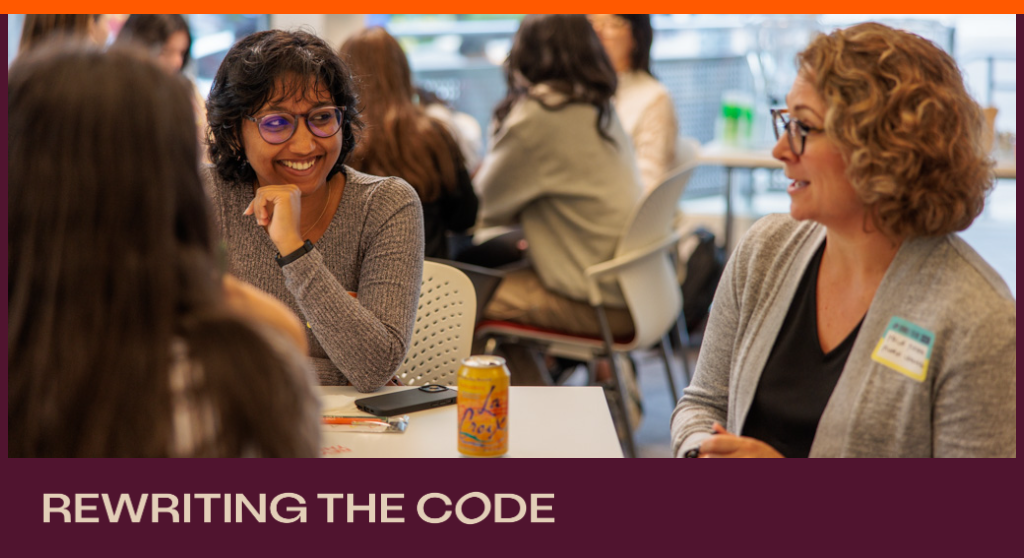
Partners who engage candidates consistently throughout the year see measurably fewer reneges than those who only show up during hiring season. One of our partners shifted from treating Rewriting the Code (RTC) membership as a single step in the hiring process to a multi-touch approach. They kept thorough documentation of who they engaged with at events and, when an application came in from RTC, cross-referenced it to see if they had already met that candidate.
Candidates who had already met more than once were significantly less likely to renege, and increased communication from the team reinforced that further. We see this often with partners that are less widely recognized or located outside established tech hubs. Consistent presence in our programming turns unfamiliar company names into ones candidates actively want to work for.
If early-career hiring is getting harder while your team gets leaner, your sourcing strategy cannot stay the same. Building this internally takes time. The most effective way to maintain candidate relationships outside of hiring season is to stay present –year–round– in the spaces where candidates are already developing, such as conferences and on-campus recruiting. If you’re ready to stop rebuilding from zero every fall with Gen Z, a year-round, community-focused engagement strategy is key.