Most federal contractors don’t realize how much can go wrong during a FAS catalog platform migration until they’re already in the middle of one. The right FAS Catalog Platform Migration Service Providers make the difference between a clean transition and a mess of rejected modifications, broken pricing data, and TAA compliance gaps that stall your catalog for weeks. Accurate data mapping from legacy catalog fields to new FAS platform schemas is harder than it looks, and SIN reclassification adds another layer of difficulty. After reviewing dozens of firms in this space, this guide covers the five providers worth your attention in 2026. The Research Approach for this Ranking Public information drove every decision here. Company websites, published case studies, client testimonials, and federal procurement directories were all pulled and compared. Only firms with a documented track record in GSA Schedule management, FAS platform transitions, or federal catalog compliance made the cut. See the full research breakdown Road Map Consulting – Best for federal government software contracting and GSA acquisition support Coley Government Contract Services – Best for government contract acquisition and GSA Schedule management The Gormley Group – Best for GSA Schedule consulting and federal procurement services Winvale – Best for government contract consulting and GSA Schedule management EZGSA – Best for federal GSA contracting and government sales strategy Why FAS Catalog Platform Migration Service Providers Matter for Your Business Picking the wrong partner for a FAS catalog migration doesn’t just slow things down. It can result in catalog item errors, pricing compliance failures, and modification rejections that cost weeks of recovery time. Making sure legacy catalog fields map accurately to new FAS platform schemas is one of the trickiest parts of this work. Country-of-origin documentation and TAA compliance requirements add another layer that many teams underestimate until something breaks mid-transfer. Providers with real experience in this space know where those failure points live. They protect your catalog item migration accuracy rate, shorten time-to-activation from migration start to live status on GSA Advantage, and keep your pricing compliance rate tight across every transferred item. That kind of operational knowledge is genuinely hard to replicate without having done this work before. Top 5 FAS Catalog Platform Migration Service Providers Breakdown and Comparison Note: All data in this table is sourced from review platforms and the official websites of the listed companies. Company Name Years Operating Headquartered In Road Map Consulting Since 2009 Alexandria, VA Coley Government Contract Services Since 2001 San Antonio, TX The Gormley Group Since 2012 Washington, DC Winvale Since 2003 Richmond area EZGSA Since 1999 Bethesda, MD 1. Road Map Consulting – Best for Federal Government Software Contracting and GSA Acquisition Support What Does Road Map Consulting Do? Road Map Consulting has been advising federal and state government contractors since 2009, with a specific focus on GSA Schedule preparation, contract management, and FAS platform navigation. They’ve helped over 300 firms secure Government-Wide Acquisition Contracts, resulting in more than $1 billion in task order awards for their clients. Their FAS migration consulting services are built around the procurement and compliance realities that make federal catalog transitions genuinely difficult (not just paperwork-heavy, but strategically complex). That kind of depth in federal acquisition is rare among consulting firms of their size. Why Road Map Consulting Stands Out for FAS Catalog Platform Migration Service Providers: Road Map Consulting addresses one of the most persistent problems in federal catalog migration: the gap between commercial product data and what GSA’s FAS platforms actually require for compliant submission. Their focus on customized, results-driven strategies rather than templated approaches means contractors get guidance that maps to their specific catalog structure and contract terms, not a generic checklist. Summary of Real User Reviews: Road Map Consulting carries a strong reputation built on measurable outcomes. Clients consistently point to the firm’s ability to demystify federal procurement processes that most contractors find overwhelming. The ISO 9001:2005 certification adds an extra layer of process credibility, and the $1 billion-plus in documented client awards tells you this isn’t a firm that relies on reputation alone. 2. Coley Government Contract Services – Best for Government Contract Acquisition and GSA Schedule Management What Does Coley Government Contract Services Do? Coley Government Contract Services has been working in GSA Schedule consulting since 2001, and their numbers are hard to argue with. They’ve helped clients win and manage more than $26 billion in government contracts, and their GSA TotalSupport™ program covers the full compliance cycle from initial award through ongoing contract administration. Their Audit Guard service is particularly relevant for contractors handling FAS catalog migrations, since post-migration compliance reviews are where a lot of errors surface. That 98% customer retention rate (not something most firms advertise, because most can’t match it) says something real about consistency. Why Coley Government Contract Services Stands Out for FAS Catalog Platform Migration Service Providers: Coley has built a specific capability around managing the long-term compliance demands that follow a catalog transition, not just the initial migration itself. That sustained support structure is exactly what federal contractors need when GSA modification reviews and correction cycles pile up after a platform switch. Summary of Real User Reviews: The 98% customer retention rate across more than two decades is the clearest signal here. Long-term client relationships spanning startups to multi-billion dollar companies suggest Coley delivers consistent value regardless of contract size. Multiple awards, including Gold Communicator Awards and recognition as a Best Place to Work five years running, reflect a firm that takes both client service and internal quality seriously. 3. The Gormley Group – Best for GSA Schedule Consulting and Federal Procurement Services What Does The Gormley Group Do? The Gormley Group is a Washington, DC-based GSA and VA Multiple Award Schedule consulting firm with a team of 24 and a combined management experience that runs well over 300 years. What makes them particularly relevant to FAS catalog platform transitions is founder Bill Gormley’s background: 28 years inside GSA, including a direct role in designing the MAS Schedule Program. They

Best Platforms for Managing HIPAA Compliance in Healthcare
Healthcare data breaches now cost organizations an average of $7.5 million in penalties and settlements, with the Office for Civil Rights (OCR) ramping up enforcement every year. In 2025 alone, 170 email-related HIPAA breaches exposed protected health information (PHI) belonging to more than 2.5 million patients. The most frequently cited violation by OCR remains the same: failure to conduct a proper Security Risk Analysis (SRA). Your organization cannot afford to manage HIPAA requirements using spreadsheets, disconnected tools, and paper files. The right HIPAA compliance platform brings together risk assessments, policy management, workforce training, Business Associate Agreement (BAA) tracking, and incident documentation into one auditable system. This guide profiles five of the best platforms for managing HIPAA compliance in healthcare, covering solutions built exclusively for healthcare organizations, automation-focused multi-framework systems, and purpose-built tools for clinics and business associates. How to Select the Best Platforms for Managing HIPAA Compliance in Healthcare Our research was conducted in March 2026 using each platform’s website, founding records, funding announcements, feature documentation, native system connections, framework coverage, and independent user reviews. Healthcare Exclusivity vs. Multi-Framework Scope: Platforms built exclusively for healthcare include pre-configured HIPAA workflows that work out of the box, while multi-framework platforms offer broader GRC coverage for health tech companies managing SOC 2 or ISO 27001 alongside HIPAA. Security Risk Analysis (SRA) Capability: The SRA tops the list of OCR violations, so confirm your platform guides or automates the SRA process with structured risk scoring and documentation acceptable to OCR auditors. BAA and Vendor Management: Every business associate who accesses PHI needs a signed BAA on file, so your platform should include centralized BAA tracking, automated renewal reminders, and vendor risk assessment tools. Workforce Training and Completion Tracking: HIPAA mandates documented annual training for all staff handling PHI, so the platform includes training modules, completion tracking, and certificate generation as a built-in feature. Automation and Continuous Monitoring: Manual compliance processes leave gaps between audits, so platforms with continuous automated control monitoring, automatic evidence collection, and real-time alerts reduce the risk of missing compliance issues before OCR finds them. List of Best Platforms for Managing HIPAA Compliance in Healthcare Here are the five platforms evaluated in this guide: ComplyAssistant Sprinto Secureframe HIPAAtrek First Healthcare Compliance Best Platforms for Managing HIPAA Compliance in Healthcare 1. ComplyAssistant Founded: 2002 in Woodbridge, NJ by Gerry Blass, a former healthcare CISO; cloud software launched in 2008. Focus: 100% healthcare-exclusive GRC platform serving 100+ healthcare organizations with HASC endorsement. Frameworks: Covers HIPAA, HITECH, OMNIBUS, HICP, HITRUST, NIST, and PCI in a single platform. Licensing: Unlimited user and location licenses with no per-seat scaling costs. Consulting: Optional virtual CISO consulting offered alongside the software for additional support. Company Overview: ComplyAssistant started in 2002 when Gerry Blass, a former healthcare Chief Information Security Officer (CISO), built it to address real compliance gaps he saw in clinical settings. The cloud software launched in 2008 and now serves more than 100 healthcare organizations exclusively. It’s the only platform in this guide built entirely for healthcare and is endorsed by the Hospital Association of Southern California (HASC). The platform addresses HIPAA, HITECH, HICP, HITRUST, NIST, and PCI under unlimited user and location licensing, meaning your organization pays one price no matter how many employees or facilities you have. You can add an optional virtual CISO consulting layer if you need hands-on compliance support beyond the software. Best For: Health systems, hospitals, and managed service providers (MSPs) that need a healthcare-exclusive, HASC-endorsed GRC platform addressing multiple frameworks under unlimited licensing with optional virtual CISO support. Standout Feature: The only platform in this guide built 100% for healthcare, endorsed by HASC, with unlimited user and location licensing and an optional virtual CISO consulting service. 2. Sprinto Founded: 2020; 1,000+ customers across 75 countries supporting 20+ compliance frameworks including HIPAA, SOC 2, ISO 27001, GDPR, and PCI DSS. Integrations: 300+ native connections to cloud, identity, HR, and SaaS platforms including AWS, GCP, Azure, Okta, and GitHub. Automation: Continuous automated control monitoring across connected systems with automatic evidence collection requiring no screenshots or spreadsheets. HIPAA Tools: Day-1 HIPAA setup mapping PHI flows, risks, controls, and safeguard requirements with AI-supported vendor oversight and real-time PHI protection monitoring. Trust Center: One-click shareable Trust Center pre-loaded with certifications, policies, controls, and live compliance status for customers or auditors. Company Overview: Sprinto launched in 2020 and grew quickly to 1,000+ customers in 75 countries by building a multi-framework compliance automation platform that connects to 300+ systems and monitors HIPAA controls continuously. Manual evidence collection isn’t needed because the platform pulls documentation automatically from connected systems. Sprinto maps PHI flows, risks, and administrative and technical safeguards on Day 1, monitors vendors using AI, and creates a shareable Trust Center that customers or auditors can access anytime to see live compliance status. This platform works best for digital health companies and health tech startups managing HIPAA alongside SOC 2 or other frameworks. Best For: Digital health companies, health tech startups, and business associates needing automated HIPAA compliance alongside SOC 2, ISO 27001, or other frameworks via 300+ system connections and continuous control monitoring. Standout Feature: 300+ native system connections with automatic Day-1 HIPAA setup that maps PHI flows, risks, and safeguards from the first day without screenshots, spreadsheets, or manual documentation. 3. Secureframe Founded: 2020 in San Francisco, CA by Shrav Mehta and Natasja Nielsen; raised $79 million from Kleiner Perkins, Base10 Partners, and Gradient Ventures. Frameworks: Supports 40+ compliance frameworks including HIPAA, SOC 2, ISO 27001, PCI DSS, GDPR, FedRAMP, CMMC, and NIST. Integrations: 300+ connections for automated evidence collection and continuous control monitoring across cloud infrastructure. Common Controls: Single-control mapping across multiple frameworks so evidence is reused across HIPAA, SOC 2, and ISO 27001 without duplication. Expert Support: 30+ in-house compliance experts and former auditors available to guide users through HIPAA setup and readiness. Company Overview: Secureframe was founded in 2020 in San Francisco by Shrav Mehta and Natasja Nielsen and raised $79 million from Kleiner Perkins and other leading investors to

5 Insurance Compliance Rules Arizona Contractors Must Follow
Arizona contractors face strict insurance rules under state law. State agencies require proof of proper coverage to issue and renew a license. Arizona contractors must follow five key insurance compliance rules to keep their licenses active and protect their businesses. They must carry the right policies, confirm coverage for workers and subcontractors, and keep insurance in place through the full contract term. If they miss a step, they risk fines, license suspension, or contract disputes. This article explains the rules that shape insurance compliance for contractors across Arizona. Maintain General Liability Insurance covering injury and property damage related to contract work. Arizona contractors must carry general liability insurance to cover injury and property damage tied to their work. This policy pays for medical costs, repair bills, legal fees, and settlements if a third party files a claim. As a result, it protects both the contractor and the client from high out-of-pocket costs. State law and many project contracts require this coverage. In addition, property owners and general contractors often ask for proof of insurance before work begins. Without it, a contractor may lose bids or face contract issues. General liability insurance covers third-party bodily injury and damage to another person’s property caused by the contractor’s operations. It does not replace workers’ compensation or commercial auto coverage, which handle employee injuries and vehicle claims. Many contractors compare contractor insurance services in Arizona to meet these rules and keep policies active through the full term of the job. Options for Contractor Insurance in Arizona help contractors secure fast proof of coverage and stay compliant with state and contract requirements. Ensure Workers’ Compensation Insurance for any employee, with proper waivers for sole owners. Arizona law requires most contractors to carry workers’ compensation insurance for their employees. This coverage pays for medical care and part of lost wages after a job injury. It also protects the contractor from most injury lawsuits. Contractors must secure a policy through a licensed carrier or qualify as self-insured if they meet state rules. In addition, they must post notice of coverage and report any work injury to the insurer right away. The Claims Division oversees carriers and self-insured employers to confirm that workers receive benefits under state law. Sole owners and certain partners may choose to reject coverage for themselves. However, they must file a state-approved waiver to do so. Without a proper waiver on file, the owner may face penalties and unexpected liability. Therefore, every contractor should review payroll, job roles, and ownership status to confirm that each person has the correct coverage or waiver in place. Keep Professional Liability Insurance if providing design or consulting services Arizona contractors who offer design, engineering, or consulting services face added risk. A client may claim that an error, omission, or poor advice caused financial loss. General liability insurance does not cover this type of claim. Professional liability insurance, also called errors and omissions coverage, fills that gap. It protects the contractor if a client alleges negligent design, faulty plans, or improper guidance. This coverage often pays for legal defense costs and settlements tied to professional services. Contractors who provide design-build services or delegated design work should review their policies with care. As projects grow more complex, disputes over plans and specifications can increase. Therefore, the right limits and terms matter. In addition, the contractor must report any claim to the insurer within the policy period. Late notice can lead to denial of coverage. Careful record keeping and prompt action help protect both the business and its assets. Verify insurance coverage of all subcontractors before work begins to avoid audit issues. Arizona contractors must confirm that every subcontractor carries proper insurance before any job starts. If a subcontractor lacks coverage, the contractor may face audit charges, unpaid claims, or added premium costs. They should request a current certificate of insurance from each subcontractor. The document must list general liability, workers’ compensation, and commercial auto coverage if vehicles are used. It should also show policy limits and expiration dates. Next, they need to review the limits and confirm they match contract terms. In addition, they should check that the contractor appears as an additional insured if the contract requires it. They must track expiration dates and request updated certificates before policies lapse. As a result, they reduce audit surprises and limit gaps that shift risk back to their own policy. Maintain insurance coverage through warranty periods until all contract obligations are fulfilled. Arizona contractors must keep insurance active through the full warranty period. Coverage cannot end at project completion if the contract requires warranty work. The duty to insure often lasts for years after final payment. Most contracts require the same types and limits of coverage during the warranty term. For example, general liability policies often must stay in force until all repair duties expire. If coverage lapses, the contractor may breach the contract. In addition, many insurance policies include warranties that require the contractor to meet certain standards. A warranty in a policy acts as a promise. If the contractor fails to meet that promise, the insurer may deny a claim. Therefore, contractors should track warranty deadlines and policy renewal dates with care. They should confirm that subcontractors also keep required coverage in place. This approach protects the contractor from uncovered claims tied to past work. Conclusion: Arizona contractors must carry proper workers’ compensation coverage, general liability insurance, and any bonds the state requires. They must keep policies active, meet state limits, and report changes to the Registrar on time. If they follow these rules, they reduce legal risk and avoid fines, license suspension, or project delays. Clear records, accurate payroll reports, and honest communication help them protect their license and build steady work across Arizona.

The Hidden Cost of Data Integration Shortcuts: Why One-Size-Fits-All Connectors Slow You Down
You aim to automate. That’s the goal. Automation is what most HR leaders strive for—less manual entry, fewer errors, and more time to focus on people, not paperwork. But here’s the problem. The road to disaster is paved with good intentions and “smart” shortcuts that promise efficiency but deliver headaches. You invest in tools. You follow advice. You adopt so-called best practices. And yet, you’re still stuck. So, you opt for what seems like a logical solution: tasking IT with building the data integration, investing in an Integration Platform as a Service (iPaaS) tool, or enabling a native connector bundled with your HR app. These choices feel efficient. Strategic. Smart. But smart doesn’t always mean effective. Manual work creeps back in. HR data doesn’t sync right, projects stall, and your team gets frustrated. Whether it’s recruiting, onboarding new hires, or syncing payroll to your ERP, the workload never lets up. And somewhere along the line, you realize those shortcuts weren’t shortcuts at all. They were detours that cost you more in the long run. When “We’ll Handle It” Becomes “Why Isn’t It Working?” Internal IT teams truly want to help. But they’re often already stretched thin managing security protocols, software updates, and company-wide systems. HR data integration—especially complex ones like ERP integration or ATS integration—rarely tops their priority list. And when they do? The intricacies of HR-specific logic can trip up even the most capable developers. Job codes, effective dates, workflow timing. These details matter, and they rarely get built right the first time. You wait. You follow up. You re-explain the same processes. Meanwhile, the manual tasks you set out to eliminate keep piling up. iPaaS Vendors Say “We Can Do That”—Until They Can’t iPaaS platforms promise a lot. They can move data between almost any two systems, and they often come with sleek dashboards and automation flows. When you ask if they can sync your payroll app to your ERP or automate onboarding between your ATS and HRIS, the answer is always, “Sure, we can do that.” But “can” and “should” are two different things. What they don’t usually say is that they don’t specialize in HR. They don’t understand why your payroll integration has to support retro pay adjustments, or how your approval workflows vary by role and region. They may move data, but not with the logic or precision you need. So, the burden falls back on your team. You become the project manager, writing specifications, testing use cases, and cleaning up logic errors. Instead of automation, you end up with more admin work. Instead of a working payroll integration, you get mismatched data, delays, and frustration. iPaaS tools can connect platforms, but if they don’t understand how HR data flows—or why timing matters—they can’t deliver the results your business expects. Native Connectors: Built for the Average, Not for You Out-of-the-box native connectors promise fast results. “Just turn it on,” they say. But those tools cater to the lowest common denominator. They assume every business runs the same workflows, uses the same fields, and updates data the same way. You know better. Your HR systems don’t fit a generic mold. You need custom fields and conditional logic. You need support for multiple locations, roles, and approval paths. Native connectors don’t flex that far. Try to force a square peg into a round hole, and eventually, the hole wins. What you really need is data connectors that adapt to your exact structure, especially for sensitive workflows like payroll integration and ERP integration. When All Else Fails…Back to the Spreadsheet So you fall back on the old standby: spreadsheets. After weeks of trying to make generic tools fit specific HR needs, your team returns to manual entry. Copying data from your ATS into your HRIS. Manually updating payroll records in ADP. Re-keying ERP journal entries every pay period. The “smart” solution you trusted? Still incomplete. Still not helping. Still costing you time, energy, and momentum. The Hidden Costs It’s easy to overlook the price of patchy integration when no one sends you a bill. But the cost is real, and it adds up. Your HR team spends hours managing data instead of focusing on people. Mistakes creep in, reports are delayed, and projects lose steam. Confidence in your systems erodes. Leadership starts to question the value of your tech stack. Your team loses motivation. And worst of all, you’re stuck reacting to problems instead of leading strategic change. Automation isn’t supposed to work like this. But when it’s built without HR in mind, this is the outcome. What Actually Works? Custom HR Data Integration That Delivers Here’s the truth: generic tools don’t work for HR. Not when the workflows are complex, the stakes are high, and the margin for error is razor-thin. What you need is a partner who understands HR. That’s Flexspring. Flexspring doesn’t dabble in HR integration—they specialize in it. Their custom-built data connectors are designed specifically for the platforms you use and the workflows you manage. Whether it’s payroll to ERP, ATS to HRIS, or compliance-specific reporting, Flexspring’s integration experts build exactly what you need. No rigid templates. No “close enough” logic. Just fast, flexible, custom-built connectors that deliver on day one. You get reliable automation. Clean data. And finally—freedom from spreadsheets. Real-World Results: HR Data Integration in Action Galloway Saves 1,500+ Hours Per Year with Automated ATS Integration Galloway, a leading architecture and engineering firm, manually transferred candidate data between Culture Index and Workable. Recruiting slowed to a crawl. By partnering with industry experts, they automated the entire process, creating a seamless ATS integration that saved over 1,500 hours annually. Recruiters finally had time to focus on talent, not data entry. “We used to spend hours transferring applicant data by hand. Now, the data flows automatically. Flexspring’s integration saved us more than 1,500 hours last year—and gave our recruiting team their time back.” — Director of Talent Acquisition, Galloway Terlato Wine Group Reclaims 20+ Hours a Month Through Payroll to ERP Integration Terlato
Chain of Responsibility in Transport: What Compliance Looks Like Across the Supply Chain
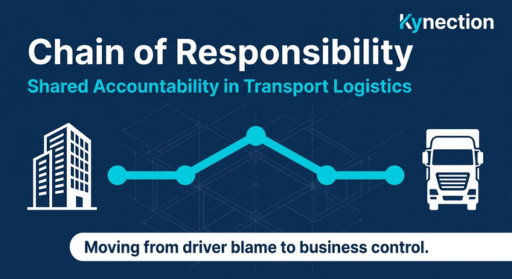
Transport compliance is often considered a driver issue. In reality, accountability is shared throughout the supply chain. Chain of Responsibility (CoR) is part of the Heavy Vehicle National Law and applies to the people whose decisions shape the transport task. That includes businesses that schedule work, prepare loads, manage dispatch and control the flow of information. The challenge with chain of responsibility transport is not just knowing the rules, but showing how those rules are applied in practice. That is why CoR matters beyond the transport team. The law makes clear that safety duties are shared by parties in the chain and depend on the function a person or business performs, not simply their title. In plain terms, if your work influences a heavy vehicle journey, your decisions may carry compliance risk. Why This Matters More Now In many businesses, CoR is still treated more as paperwork than as something built into transport planning. On its own, that approach creates too many gaps in the process. CoR is built on influence and control. Risk can begin with a rushed delivery promise, late loading, poor route planning, weak maintenance follow-up or missing transport information. By the time the truck is underway, that pressure may already be part of the job. Parties in the chain are expected to ensure, so far as is reasonably practicable, the safety of their transport activities and must not directly or indirectly cause unsafe conduct that leads to fatigue, speed, mass, dimension or loading breaches. This is why CoR is better understood as a business control issue. It covers operations, dispatch, warehousing, transport planning, contractor management and leadership oversight. It is not only about whether a driver did the right thing, but also about whether the business created the conditions for safe and lawful work. Where Compliance Pressure Builds Most CoR issues are not caused by one major failure. They usually come from small disconnects in the way teams, systems and daily routines operate. Common pressure points include: delivery schedules that leave no room for lawful work and rest incomplete load or consignment information poor visibility over maintenance or vehicle readiness contractor instructions handled through disorganised emails or calls safety records stored in different places and hard to check managers seeing reports after the problem, not while it is developing These gaps matter because CoR focuses on what a business can influence and control. If your systems do not show who approved a task, what information was available at the time and what action was taken once a risk appeared, it becomes harder to justify that the business took reasonably practicable steps. Why Leadership Has A Role Here The NHVR states that executives of businesses in the Chain of Responsibility have a due diligence duty. This means they must take reasonable steps to understand transport risks, ensure that the right resources and processes are in place, and see that issues are identified and addressed in time. That raises the standard for leadership oversight. It is no longer enough to assume compliance is being managed on the ground. More than policies on paper, leaders need clear visibility into how controls are working in regular operations. The real question here is whether the business can show how those policies are reflected in the way work is planned, approved and carried out. This is not a governance formality but a practical question of whether leaders can see what is happening before something goes wrong. What Compliance Looks Like in Practice Strong CoR compliance comes down to whether the business can show control over the transport task. First, decision-making is clearly assigned. The business knows who is responsible for scheduling, loading, route planning, maintenance and records. Second, records are complete and easy to trace. Missing, delayed or inconsistent documents make compliance harder to prove. Third, related processes are connected. Scheduling, fatigue, maintenance, incident records and compliance forms should align when they involve the same transport task. At its core, practical compliance depends on defined ownership, reliable records and processes that promote safe and lawful work. Why Records Count in CoR Good records are not only useful at audit time. They also help businesses identify issues earlier, show what action was taken when conditions changed and reduce confusion when a job shifts during the day. That is especially important in transport because work rarely stays fixed. Delivery times move, loads shift, vehicles need maintenance and instructions can be updated at short notice. Without clear records, it becomes harder to see what changed and how the business responded. Audit readiness also becomes important here. When records are time-stamped, traceable and retrievable, businesses are in a stronger position to show that their safety systems are being actively managed. That is where system design matters, not just whether records exist, but whether they are accessible to the right people at the right time. It is also one reason more compliance processes are shifting towards digital systems. Paper records still have a place, but they are more difficult to manage once work starts moving. Digital systems make it easier to keep fatigue records, maintenance history, incident reports and other compliance documents in one place. That does not mean software creates compliance on its own, but it does make a sound process simpler to manage and prove. A Practical Way To View CoR A useful way to view Chain of Responsibility is this: it is a test of whether the business can control transport risk at the points where that risk is created. That includes: what was promised to the customer how the job was scheduled whether the load was ready and accurate whether the vehicle and driver were fit for the task whether records were completed and checked whether emerging issues were seen and acted on Each of these points is where a business either demonstrates control or exposes a gap.When businesses look at CoR this way, it stops being a narrow compliance task and becomes part of better operations. It strengthens visibility, accountability and

Why Salon Scheduling Software is a Game Changer for Your Staff and Customers
Running a salon effectively is about more than just offering quality services; it’s about managing time efficiently. Whether you’re coordinating multiple stylists, managing client appointments, or dealing with sudden schedule changes, keeping everything organized is a challenge. Without a reliable system, salons can face booking conflicts, missed appointments, and unhappy clients. This is where salon scheduling software steps in, offering an efficient way to manage both staff and client appointments, ultimately making the entire operation smoother for everyone involved. The Need for Better Scheduling in Salons Time is precious, especially in a fast-paced environment like a salon. Juggling multiple appointments, managing staff shifts, and handling last-minute changes can lead to confusion and errors without the right system in place. Without automated scheduling, salons risk double-booking clients, missing appointments, or running behind schedule, all of which hurt customer satisfaction and impact the bottom line. By integrating scheduling software into daily operations, salons can avoid these issues. Clients appreciate the convenience of being able to book online at any time, while staff members benefit from a clear, easy-to-read schedule that minimizes errors. With fewer administrative tasks to handle manually, staff can focus on providing excellent service, which is what really matters. Simplifying Staff Scheduling and Appointment Management Managing a busy salon requires more than just keeping track of appointments. It’s equally important to coordinate staff schedules effectively. Salon scheduling software simplifies this task by providing a central platform to manage both employee shifts and client bookings. 1. Reducing Mistakes with Automation Manual scheduling often results in errors, such as double-bookings or scheduling conflicts. These mistakes can lead to wasted time and frustrated clients. Scheduling software helps by automatically updating appointments in real-time, ensuring staff schedules are accurate and up-to-date. This reduces the chances of errors and makes managing multiple employees and services a lot easier. Software solutions like Time Tailor help simplify this process with tools for managing shifts, appointments, and reminders. The system allows managers and staff to view their schedules quickly, reducing the risk of confusion and missed appointments. 2. Flexibility for Staff Employees need flexibility, especially in a fast-paced work environment. Staff members may need to request time off or switch shifts, and handling these changes manually can create confusion. Scheduling software allows employees to adjust their schedules directly, reducing the workload on managers and improving staff satisfaction. By offering a flexible scheduling system, employees feel more in control of their work-life balance. Whether they need to change shifts, request time off, or take a break between appointments, the software makes these adjustments simple and hassle-free. 3. Balancing Workloads and Breaks A busy salon can easily burn out staff members without proper scheduling. Salon scheduling software ensures that employees are assigned an appropriate number of appointments while factoring in breaks. This helps prevent exhaustion and ensures that everyone on the team is working at their best, improving both employee well-being and customer service. By allowing managers to schedule breaks automatically between appointments, staff can recharge and stay focused. This leads to a more balanced work environment, fewer mistakes, and better overall performance. Improving the Customer Experience with Salon Scheduling Software For customers, ease of booking and clear communication are essential. They want a simple, hassle-free way to book appointments that fits into their busy schedules. Salon scheduling software plays a significant role in improving the customer experience by offering more convenience and reducing the chances of misunderstandings. 1. 24/7 Online Booking Gone are the days when clients had to call during business hours to schedule an appointment. With salon scheduling software, clients can book their appointments online, anytime they want. Whether it’s early in the morning or late at night, they have the ability to check available time slots and book at their convenience. This 24/7 accessibility makes it easier for clients to fit salon visits into their busy lives, improving satisfaction and increasing the likelihood of repeat business. 2. Preventing Double Bookings and Long Wait Times Double-booking and extended wait times are common frustrations in salons. Clients don’t want to spend time sitting around waiting for their appointment, and stylists don’t want to rush through services because of overlapping appointments. Salon scheduling software prevents these issues by automatically managing the flow of appointments, ensuring that each client has a dedicated time slot. With software in place, clients are more likely to be seen at their scheduled time, leading to a smoother salon experience and happier customers. 3. Automated Reminders and Confirmation One of the biggest issues for salons is missed appointments. Clients may forget their bookings or accidentally overlook them, which can disrupt the salon’s schedule. Salon scheduling software eliminates this issue by sending automated reminders via email or text message before the appointment. These reminders help reduce no-shows, saving both time and money for the salon. Clients appreciate the reminders, as they reduce the chance of forgetting their appointments, while salons benefit from a more reliable schedule. Boosting Revenue and Success with Salon Scheduling Software While scheduling software certainly improves operational efficiency, it also directly impacts revenue. By reducing missed appointments, increasing customer retention, and ensuring that staff time is optimized, salons can see significant improvements in their profitability. 1. Increasing Client Retention A simple and reliable booking system encourages clients to return to the salon. When clients can easily book their next appointment before they leave, they’re more likely to schedule future visits. Salon scheduling software offers clients the ability to book repeat appointments with just a few clicks, making it easy for them to stay on top of their future salon visits. This ease of booking leads to increased client retention, which is key for salon growth. 2. Boosting Staff Productivity When staff schedules are optimized, employees are more productive. They can focus on providing top-notch service to clients without worrying about overbooking or dealing with schedule conflicts. Scheduling software helps to ensure that staff members are assigned the right number of appointments, without feeling rushed or overworked. By keeping everything organized, the salon

How Digital Tools Are Changing the Way Construction Companies Reach Buyers
The construction industry has never been known for moving fast on technology. For decades, the playbook was simple. Build a reputation through word of mouth, show up at trade shows, run print ads in local publications, and let referrals do the rest. That playbook still works. But the companies growing fastest today are the ones combining traditional reputation with digital tools that meet buyers where they actually start their search. And increasingly, that search starts online. The Shift in Buyer Behavior According to the National Association of Home Builders, over 80 percent of homebuyers begin their search online before ever contacting a builder or contractor. That number is even higher for younger buyers entering the market for their first home, shop, or commercial space. This shift has created an opportunity gap. Most construction companies still rely on the same three channels they used 20 years ago. Referrals, yard signs, and maybe a basic website. Meanwhile, buyers are comparing options, reading reviews, checking pricing, and evaluating companies entirely through digital channels before they ever pick up the phone. The companies that have adapted are seeing results that the traditional-only approach cannot match. Online Pricing and Configuration Tools One of the biggest friction points in construction is the quoting process. A buyer interested in a metal garage, workshop, or commercial building traditionally has to call a sales rep, describe what they want, wait for a quote, and then repeat the process with two or three competitors. Online configurators and pricing tools eliminate that friction. Companies like metal construction companies now offer instant pricing on their websites, where buyers can select building size, style, features, and location, and get a price range in minutes rather than days. This changes the sales dynamic fundamentally. Instead of the company chasing leads, buyers self-qualify and arrive at the sales conversation already informed and ready to make a decision. The result is shorter sales cycles and higher close rates. Content Strategy Over Advertising Paid advertising works for construction companies, but it is expensive and stops producing the moment you stop paying. The alternative that more companies are investing in is content marketing. A well-built blog targeting the specific questions buyers ask during their research phase can generate organic traffic for years. Topics like “how much does a 30×40 metal building cost” or “do I need a permit for a metal carport” attract buyers at the exact moment they are evaluating their options. The key is specificity. Generic content about “the benefits of metal buildings” does not rank and does not convert. Content that answers a specific question with real data, real pricing, and real guidance earns trust and earns clicks. Construction companies that invest in this approach build a library of content that compounds over time. Each article is a permanent asset that continues attracting qualified buyers month after month without additional ad spend. Local SEO and Dealer Networks For construction companies that operate through dealer networks or serve multiple geographic markets, local SEO presents a unique challenge. The company needs visibility in dozens or hundreds of local markets simultaneously, but cannot create a unique physical presence in each one. The solution is a combination of localized content, dealer-specific landing pages, and structured data that helps search engines understand which markets the company serves. Companies that execute this well show up in local search results across their entire service area, not just their headquarters city. This is particularly important for companies that offer nationwide delivery and installation. A buyer in rural Georgia searching for a metal workshop needs to find the company just as easily as a buyer in suburban Dallas. Digital Tools That Move the Needle The specific tools that matter most for construction companies today include: Product configurators and instant pricing calculators CRM systems built for long sales cycles (not SaaS trial funnels) Review management platforms that aggregate and display customer testimonials SEO-optimized blog content targeting buyer-intent keywords Email automation for follow-up sequences after initial inquiry Analytics dashboards that track which channels produce actual sales, not just traffic The companies investing in these tools are not replacing their traditional sales process. They are augmenting it with digital infrastructure that works around the clock. What This Means for the Industry The construction industry is not going fully digital anytime soon. Relationships, reputation, and craftsmanship still matter more than anything else. But the companies that combine those traditional strengths with modern digital tools are building a significant competitive advantage. The gap between digitally-equipped construction companies and traditional-only operators is widening. And for buyers, the companies that make it easiest to research, compare, and buy online are the ones that win the first conversation.

How to Increase Productivity If You Work from Home
Working from home sounds ideal – and in a lot of ways, it is. You get more freedom. There’s no commute. And you get your own space. But it can also be surprisingly hard to stay focused. One minute you’re answering emails, the next you’re folding laundry or scrolling your phone without even thinking about it. If you’ve ever felt like your productivity drops at home – and those are sure signs – then you’re definitely not alone. The trick here isn’t to work harder – it’s to work smarter by building a setup that helps you stay on track. Establish a Routine When there’s no boss or office hours to guide your days, it’s easy for things to feel a little scattered. That’s why having a simple routine helps so much. You don’t need anything strict or complicated – just a consistent way to start your day. Wake up around the same time. Have your coffee. Maybe get dressed into something that isn’t pajamas. Sit down with a plan. This tells your brain, “Okay, we’re working now.” And just as important – give yourself permission to take breaks. You’ll come back feeling way more refreshed than if you try to power through all day. After all, that’s a very quick route to experiencing burnout. Create a Dedicated Workspace Where you work really does affect how you work. If you’re bouncing between the couch, the bed, and the kitchen table, it’s harder to stay focused because your brain doesn’t associate those places with getting things down. Even a small, dedicated spot can make a difference. It doesn’t need to be perfect – just somewhere that feels like a “work zone.” And if home starts to feel a bit too repetitive or distracting, changing your environment now and then – like spending a day at a coworking space San Antonio – can help you reset and get back into a productive flow. Set Firm Boundaries This one can be tricky, especially if you live with other people. When you’re home, others might assume you’re available – but that’s not always the case. Let people know your working hours so you’re not constantly interrupted. Just as importantly, set boundaries with yourself. It’s so easy to get pulled into small distractions that eat up your time without you noticing. Try to stay focused during your work hours. Then actually stop working when the day is done. Such separation makes a huge difference. Plan Ahead If you’ve ever started your day not knowing what to tackle first, you know how quickly that can slow you down. Taking a few minutes at the end of your day to plan tomorrow can really help. Write down your top priorities so you can jump straight in the next morning. It doesn’t need to be anything fancy – just enough to give you direction and momentum. To conclude, working from home isn’t about being perfect. Some days will feel super productive, others not so much – and that’s normal. However, with a bit of structure and a few intentional habits, you can make your workdays feel a lot more focused (and a lot less chaotic).

5 Productivity Habits That Separate People Who Get Hired Fast From Those Who Don’t
Most people think of job searching and interview preparation as career skills. They’re not. They’re productivity skills. The difference between someone who lands a role in three weeks and someone who grinds for six months often has nothing to do with qualifications. It comes down to how they structure their time, manage their energy, and build systems around the process. If you run a business, manage a team, or have ever hired someone, you already know this instinctively. The candidates who show up prepared, articulate, and sharp aren’t just “better.” They’ve built habits that make them more efficient at every stage of the process. And those same habits translate directly into how productive they’ll be once they’re on your team. Here are five productivity habits that consistently separate fast hires from slow ones. 1. They Use Structured Practice Instead of Random Preparation The average job seeker prepares for interviews the same way a student crams for an exam. They google “common interview questions,” skim a few blog posts, and rehearse answers in their head while lying in bed the night before. This is the equivalent of reading your notes once and hoping for the best. It doesn’t work. People who get hired fast treat preparation like deliberate practice. They work from a structured set of questions that are specific to the company and role they’re targeting, not generic lists pulled from the first search result. Resouces like this company-specific question bank aggregate real questions that have been asked at hundreds of companies, which means candidates can focus their prep time on what’s actually relevant instead of guessing. The productivity principle here is simple: focused input beats scattered effort. Thirty minutes practicing five targeted questions will always outperform two hours skimming fifty generic ones. The candidates who understand this spend less total time preparing but walk into interviews significantly more ready. 2. They Batch Their Job Search Activities One of the biggest productivity killers in a job search is constant context switching. Checking job boards in the morning. Writing a cover letter after lunch. Tweaking a resume before dinner. Doing a quick LinkedIn scroll before bed. Each of these activities requires a different mental mode, and jumping between them throughout the day burns energy without producing much output. Fast hires batch their activities the same way a productive entrepreneur batches email, meetings, and deep work. They dedicate specific time blocks to specific tasks. Monday and Thursday mornings might be for applications. Tuesday afternoons for interview practice. Wednesday for networking outreach. Friday for reviewing progress and adjusting strategy. This approach works because it reduces decision fatigue. When you sit down and already know what you’re doing for the next 90 minutes, you skip the 20 minutes of “what should I work on?” that most people lose every single session. Over the course of a multi-week job search, those saved minutes add up to days of recovered productive time. 3. They Manage Energy, Not Just Time Here’s something most productivity advice gets wrong about interviews: it’s not enough to manage your calendar. You need to manage your energy. A job seeker who schedules three back-to-back interviews on the same day will perform worse on each one than someone who spaces them out with recovery time in between. Similarly, someone who does their hardest prep work at 10 PM after a full day of work will retain less and perform worse than someone who practices during their peak cognitive hours. The fastest hires pay attention to when they’re sharpest and schedule their highest-stakes activities accordingly. If you’re a morning person, that’s when you do mock interviews and draft tailored cover letters. Afternoons might be better for lower-effort tasks like submitting applications or organizing your tracking spreadsheet. The goal isn’t to work more hours. It’s to put your best hours toward the activities that have the highest impact on outcomes. This is the same principle that makes top-performing business professionals more effective than their peers. They don’t just work hard. They work hard at the right things during the right windows. 4. They Build Feedback Loops Into Everything Productive people in any domain share one trait: they measure what they’re doing and adjust based on results. Job seekers who get hired fast apply this same discipline to their search. They track which applications get responses and which don’t. They record their practice answers and review them for filler words, unclear structure, or weak examples. They ask for feedback after interviews when possible and use it to improve before the next one. Every interaction becomes data that informs the next attempt. This is where most candidates fall short. They treat each interview as an isolated event rather than a data point in a larger system. Without feedback loops, you can repeat the same mistakes for months without realizing it. With them, you improve with every iteration. The practical version of this is straightforward. Keep a simple spreadsheet that tracks every application, every interview, and the outcome. After each interview, spend ten minutes writing down what went well and what didn’t. Review this log weekly and look for patterns. Are you consistently struggling with behavioral questions? That tells you exactly where to focus your practice time next week. 5. They Set Clear Daily Minimums Instead of Vague Goals “I need to find a job” is not a goal. It’s a wish. And wishes don’t drive daily behavior. The fastest hires replace vague intentions with specific daily minimums. Apply to three roles. Practice answering two interview questions out loud. Send one networking message. Update one section of the resume. These numbers might seem small, but that’s the point. Small daily minimums are achievable, which means they actually get done. And consistency over weeks beats intensity in bursts every single time. This mirrors what productivity researchers have found about habit formation in general. The people who exercise regularly aren’t the ones who commit to hour-long gym sessions. They’re the ones who commit to showing up, even if it’s

Zillow Zestimate vs Real Investor Value: What Most Homeowners Don’t Know
If you’ve ever checked your home’s value online, chances are you’ve looked at Zillow. For a lot of homeowners, that number becomes the reference point. It feels official. It’s easy to access. And in many cases, it’s the first thing people see when they start thinking about selling. But here’s the reality most people don’t realize: That number is only one version of your property’s value — and it’s often not the one that actually matters when it comes time to make a decision. The Problem With a Single Number Zillow’s Zestimate is designed to give a general idea of value based on public data and comparable sales. It works well as a rough estimate, especially in areas where homes are very similar. But real properties aren’t always that simple. Two homes on the same street can have completely different values depending on things that algorithms don’t fully capture, like: Factors Algorithms Often Miss Interior condition Renovation quality Deferred maintenance Unique layouts or additions Timing and market demand A house that needs significant repairs can show a Zestimate close to a fully renovated home nearby — even though the real-world value difference could be tens of thousands of dollars. That’s where the disconnect starts. What Investors Look At Differently When a real estate investor evaluates a property, they’re not looking at a single number. They’re breaking it down into multiple layers of value. Key Investor Evaluation Metrics As-Is Value – What the property is worth in its current condition Renovated Value (ARV) – What it could sell for after improvements Repair Costs – What it takes to get from the current condition to market-ready Margin & Risk – The buffer needed to make the deal make sense So while a Zestimate might say your home is worth $300,000, an investor could look at the same property and arrive at a very different number based on what it actually needs. That doesn’t mean one is “right” and the other is “wrong” — they’re just looking at value from completely different perspectives. Why This Matters for Homeowners This is where a lot of confusion happens. As someone who works directly with homeowners and investors, a homeowner sees a Zestimate and expects offers to match that number. Then when real offers come in lower, it feels like something is off. But in reality, it’s just a different lens being applied. Different Buyer Perspectives A retail buyer may pay close to market value for a move-in-ready home An investor is factoring in repairs, time, and risk The market itself can shift depending on timing and demand Your property doesn’t have one fixed value — it has multiple, depending on how it’s being viewed. The Bigger Picture Understanding this can completely change how you approach selling. Instead of asking: “What is my home worth?” The better question becomes: “What are my options, and what does my property look like through each one?” Because the best decision isn’t always about the highest number — it’s about the scenario that fits your situation. A Smarter Way to Look at Value This is exactly where newer tools are starting to shift the conversation. Instead of relying on a single estimate, platforms are beginning to break down properties into multiple value points, giving homeowners a clearer picture of what their property could look like across different paths. For example, in a competitive real estate market like Long Beach, where properties near the coast may have significantly higher values than those further inland, it’s crucial to consider how these differences affect your sale. In such cases, consulting a wealth advisor in Long Beach can help you understand how these market nuances impact your financial strategy, offering tailored advice on investment opportunities and tax implications that align with your goals. What Modern Tools Help You Understand Tools like Topular AI, for example, focus on helping owners understand: What their property might sell for as-is What an investor might offer What it could be worth after improvements If you want to see how this works in practice, you can try Topular AI – Topular Home Solutions, a platform designed to break down your property’s real value Final Thoughts Zillow made it easy to access home values. But simplicity can sometimes create misunderstanding. The reality is, your property’s value isn’t one number — it’s a range shaped by condition, timing, and strategy. And once you understand that, you’re in a much better position to make the right move.