Introduction “It is not the strongest of the species that survives, nor the most intelligent, but the one most responsive to change.” — Charles Darwin Luxury resale has become one of the fastest-evolving segments in commerce, but the winners are not the most fashionable platforms or the loudest brands. The winners are the ones that redesigned resale as a system—where trust, speed, and ownership logic are engineered into operations, not added as marketing later. That was the mindset behind my work on Spin4Spin: building a luxury resale platform for high-end designer clothing that reached $2M in sales through operational innovation—particularly same-day authentication and rental-before-sale. What the U.S. “Monsters” Proved—and How Spin4Spin Applied It 1) The U.S. Blueprint: Luxury Resale as a Trust Infrastructure American leaders in resale evolved by turning marketplaces into institutional-grade trust systems: The RealReal scaled by industrializing authentication and operations—treating verification and quality control as a production pipeline, not a slow manual step. Fashionphile shifted the seller experience through upfront payouts—absorbing risk to deliver luxury-level convenience. Rebag reduced friction with instant pricing and offers (Clair), compressing decision time for both sides of the transaction. eBay Authenticity Guarantee institutionalized trust at marketplace scale, making high-ticket resale feel safer and more standardized. StockX and GOAT turned verification into a repeatable, standardized “factory” that makes expensive purchases psychologically safe. In hard luxury, Sotheby’s and Christie’s reinforced a crucial rule: provenance + expertise + curation transform resale into a category closer to art markets than classifieds. In watches, companies like WatchBox / The 1916 Company built growth on condition standards, service layers, and guarantees—again, trust as infrastructure. Across these companies, the pattern is consistent: Luxury resale leaders don’t compete on listings. They compete on operational certainty. They engineer trust directly into the system. 2) Spin4Spin: Applying the Same Evolutionary Logic Spin4Spin was built on that same premise from day one: resale must feel closer to a luxury boutique than to an online marketplace. Under my leadership, we engineered two core innovations that directly affected conversion and growth: A. Same-Day Authentication Authentication is the backbone of luxury resale—and the main bottleneck for most platforms. We treated it as a throughput problem and redesigned the workflow to deliver same-day authentication for high-demand items. This made trust immediate and accelerated the sales cycle. B. Rental-Before-Sale (De-Risking Ownership) Luxury buyers don’t only fear fakes. They fear regret: fit, lifestyle match, and emotional value. We introduced a rental-before-sale model that allowed clients to experience items in real life before committing. This: Reduced perceived risk for buyers Extended the monetization lifecycle of inventory Created value before the final transaction 3) Inventory as a Portfolio, Not Listings A third structural element was managing inventory as a curated portfolio, not a random feed. Some pieces drove margin.>Some drove traffic.>Some defined brand perception. This portfolio approach mirrors how the top tier of resale behaves in the U.S.—especially in hard luxury and auction environments. Conclusion: The Real Revolution in Luxury Resale Spin4Spin’s $2M in sales is not the headline—the operating model is. The American leaders proved the core truth: Luxury resale is not a marketplace problem.It’s a systems engineering problem. When: Trust is engineered through authentication pipelines Speed becomes part of the luxury promise Ownership models evolve beyond “buy or don’t buy” Resale stops being “second-hand fashion.” It becomes a modern infrastructure for how luxury circulates. That is the future of the category—and that is what Spin4Spin was built to deliver.

Finest Digital Marketing Tips For Dental Care Clinics
There was a time when patients depended on a neighbor’s suggestion. When the nearest clinic automatically earned the appointment. When location alone was enough to win trust. That version of reality is gone. Now, patients consult Google before they consult a dentist. In a matter of minutes, they compare clinics, browse websites, read reviews, check ratings, and assess credibility. Today, patients turn to Google before they turn to a dentist. Within minutes, they compare clinics, scan websites, read reviews, check ratings, and evaluate credibility. In a world where information is just a click away, the decision is no longer based on proximity alone. It is based on trust, visibility, and online presence. Let’s understand the importance of online marketing for dental hospitals. What Is Dental Marketing? Let’s be honest for a second. Most people think dental marketing simply means running a few ads or printing some flyers. Put your clinic out there. Wait for patients to show up. Hope for the best. But that definition is outdated. Dental marketing today is the structured process of attracting new patients, retaining existing ones, and building a reputation strong enough to influence decisions before someone even calls your clinic. It is about visibility. It is about credibility. It is about staying competitive in your local market. And here is where it gets interesting. Modern dental marketing is powered by digital platforms like Google Ads, Facebook Ads, and Instagram. These channels do not just “spread the word.” They allow practices to target specific demographics, income groups, and local audiences with precision. The shift is simple but powerful. An ROI-driven dental digital marketing agency does not just run random campaigns and hope for traffic. It applies tactics like Local Awareness ads, mobile advertising, Google Maps ads, and Waze ads to connect clinics with nearby patients at the exact moment they are searching for care. Timing becomes everything. Click to call ads remove friction. Emergency focused keywords capture high intent searches. And when someone needs urgent treatment, being the first visible and accessible option can make all the difference. But it does not stop there. Because dental marketing is not only about immediate appointments. It is also about long term engagement. Long term trust. And consistent reputation management that keeps a clinic top of mind long after the first visit. Best Dental Marketing Tips For Dentists Here are some of the best techniques to market your dental practice to attract more patients: Develop a Data-Driven Dental Marketing Strategy Focused on Your Ideal Patient Audience Here is where most clinics get it wrong. They start with tactics. They launch ads. They boost posts. They try a few campaigns. And then they hope something works. But a high end dental digital marketing plan does not begin with ads. It begins with clarity. First, you define your ideal patient. Who they are. What they need. What concerns them. What motivates them to book. Only then do you build a tailored marketing strategy designed specifically around that audience. Then comes the competitive edge. Through detailed competitive marketing analysis and even a free competitive analysis, dentists can uncover gaps in their local market. They can see what others are doing, where opportunities exist, and how to position themselves strategically to drive new patient growth and increase revenue. And this is where modern technology changes the game. Advanced AI tools and AI driven insights refine messaging, sharpen targeting, and optimize campaigns for maximum return on investment. Instead of guessing what might work, clinics rely on data to guide every move. Because in the end, consistent performance tracking and clear measurement turn marketing from speculation into a calculated growth engine. Not guesswork. Strategy. Dominate Local Search with Search Engine Optimisation (SEO) and Google-Centric Campaigns Most clinics want one thing. To show up first on Google. Because when someone searches for a dentist, especially in an emergency, they rarely scroll past the top results. Attention is short. Intent is high. And the first visible option often wins. That is why search engine optimization matters. By optimising for emergency keywords, mobile searches, voice searches, and even the Google Answer Box, clinics position themselves where urgency meets action. But ranking alone is not enough. A fully optimised Google My Business profile strengthens local trust and credibility. Google focused campaigns, supported by Google Analytics and smart website journey optimisation, ensure that visitors do not just land on your site. They convert. And here is where it becomes measurable. With AI enabled call tracking and a clear focus on increasing phone conversions, dentists can calculate cost per conversion and refine performance continuously. Launch High-Performing Dental Marketing Campaigns with PPC and Paid Media Speed matters. When a patient is actively searching for a dentist, the window of opportunity is small. If you are not visible in that moment, someone else is. That is where well structured dental marketing campaigns come in. By combining PPC, video advertising, Facebook Messenger ads, and strategic social media marketing, clinics can capture demand immediately instead of waiting for it to build. These channels do not just generate traffic. They generate intent driven action. But running ads is only half the equation. Tracking paid ad conversion rate and return on ad spend reveals what is actually working. The campaigns that perform well can be scaled. The ones that underperform can be adjusted or removed. And this is where precision takes over. AI driven insights refine targeting. They sharpen messaging. They ensure your ads reach the right patients at the right time. When executed correctly, these campaigns lower cost per conversion, maximise marketing performance, and directly fuel revenue growth. Not noise. Measurable results. Optimise Dental Web Design for Conversions and Patient Experience Traffic alone does not grow a clinic. Conversions do. A patient can click your ad, visit your website, and still leave within seconds. Not because they are not interested. But because the experience does not guide them to act. That is why dental web design is not just about appearance. It is about

Top Digital Marketing Strategies for Growing Businesses in 2026
Digital marketing in 2026 is no longer about simply “being online.” It is about precision, scalability, data intelligence, and sustainable growth. As markets become more competitive and customer expectations continue to rise, businesses must adopt smarter strategies rather than simply increasing advertising budgets. Technology, particularly artificial intelligence, has shifted the way brands approach visibility, engagement, and conversion. At the same time, search engines have become more sophisticated, prioritizing authority, user experience, and meaningful content over superficial optimization tactics. For growing businesses, the focus must be on building long-term digital assets while maintaining operational efficiency. The most successful companies in 2026 are those that combine strategic thinking, advanced marketing tools, and cost-effective execution models. Below are the core digital marketing strategies shaping business growth this year. Building Authority Through Intelligent Content Strategy Content remains the foundation of digital visibility, but its role has expanded beyond simple blogging. Today, content functions as a trust-building engine, a search ranking driver, and a conversion mechanism. Search engines increasingly reward depth, clarity, and real value. Thin articles designed only to target isolated keywords no longer perform as they once did. Instead, businesses must develop content ecosystems—clusters of related articles, guides, landing pages, and multimedia assets that demonstrate expertise within a specific industry. Artificial intelligence now plays a significant role in this transformation. Advanced writing platforms help businesses accelerate research, outline development, and first-draft production. These tools analyze competitor content, search intent, and keyword patterns to assist marketers in structuring optimized material efficiently. However, automation alone does not guarantee results. Businesses that achieve strong organic growth combine AI-assisted drafting with professional editorial refinement. Skilled optimization specialists ensure that tone, authority, and compliance with search guidelines are maintained. The most effective approach in 2026 involves: Strategic topic planning based on search behavior Consistent publishing cadence Performance monitoring Regular content updates Organizations that invest in intelligent content systems build digital assets that generate traffic and leads long after initial publication. Smarter Search Optimization Through Advanced Technology Search optimization has evolved from manual keyword placement to data-driven performance engineering. Modern software platforms now provide real-time insights into ranking fluctuations, backlink health, technical issues, and competitor gaps. Growing businesses are increasingly relying on AI-enhanced SEO platforms that: Identify ranking opportunities Suggest content improvements Detect technical errors Analyze search intent alignment Monitor algorithm changes These tools provide predictive insights rather than reactive analysis. Instead of waiting for traffic drops, companies can proactively adjust strategies. Another emerging trend is the integration of automated content scoring systems. These platforms evaluate readability, structure, semantic relevance, and engagement potential before content is published. By leveraging such systems, businesses can improve search performance without increasing manual workload. Importantly, technology is also reducing the barrier to entry for smaller organizations. What once required a full in-house SEO department can now be supported by intelligent software combined with experienced consultants working remotely. This shift enables companies to maintain competitive search performance while controlling costs. Cost-Efficient Outsourcing as a Growth Multiplier Not every growing business can afford a large internal marketing department. As competition intensifies, many companies are turning toward flexible outsourcing models to manage expenses while accessing specialized expertise. Outsourced optimization services have matured significantly. Today’s remote marketing partners offer structured deliverables, transparent reporting, and performance-based accountability. For companies operating within limited budgets, outsourcing offers several advantages: Access to experienced optimization professionals Reduced recruitment and training expenses Flexible scaling based on campaign needs Faster implementation timelines The key is selecting partners who prioritize strategy rather than shortcuts. Sustainable search growth depends on ethical link-building practices, quality-driven content production, and compliance with search engine guidelines. Budget-conscious SEO outsourcing does not mean sacrificing quality. Instead, it allows businesses to allocate resources efficiently while maintaining strong digital performance. AI-Driven Personalization and Customer Journey Optimization Modern consumers expect tailored experiences. Generic messaging is increasingly ignored. Artificial intelligence now enables businesses to personalize content, offers, and communication flows based on user behavior and engagement history. AI-powered marketing platforms analyze browsing data, purchase patterns, and interaction history to create dynamic content pathways. This personalization improves: Engagement rates Conversion rates Customer retention Lifetime value In 2026, successful digital marketing strategies combine organic traffic generation with automated nurturing systems. When a visitor arrives via search, AI-driven tools guide them through personalized journeys that increase the likelihood of conversion. This integration of search visibility and behavioral intelligence creates a seamless growth engine. Strengthening Brand Trust Through Expertise and Transparency Search engines increasingly prioritize experience, expertise, authority, and trustworthiness. Businesses must demonstrate credibility not only through content but also through brand positioning, and that starts at the infrastructure level. A slow or unstable website undermines even the best content strategy, which is why many growing businesses invest in virtual private server hosting to ensure consistent performance and uptime. This includes: Publishing thought leadership articles Sharing case studies Highlighting industry credentials Maintaining transparent communication Professional content developers with strong optimization backgrounds play a vital role here. Experienced writers who understand both storytelling and search behavior help brands position themselves as trusted industry voices. Rather than producing generic content, companies are investing in authoritative, well-researched material that reflects genuine knowledge. This approach strengthens both rankings and reputation. Data-Driven Decision Making Replaces Guesswork In 2026, intuition alone is not enough. Every marketing initiative must be measured and refined through analytics. Advanced dashboards now integrate: Organic traffic performance Conversion metrics Engagement signals Revenue attribution Campaign ROI Businesses that monitor data closely can identify underperforming assets, optimize high-performing pages, and allocate budgets more effectively. Artificial intelligence further enhances analytics by identifying hidden trends and forecasting performance shifts. Instead of manually analyzing spreadsheets, marketing leaders can focus on strategic adjustments. Data-backed marketing reduces waste and increases predictability—both critical for scaling organizations. Integrating Human Creativity With Machine Efficiency One of the most important digital marketing strategies in 2026 is balance. Businesses that rely entirely on automation risk producing generic, repetitive content. Conversely, those that ignore technological advancements may struggle with efficiency and scalability. The competitive advantage lies in combining: AI-assisted research and drafting Experienced

Bus Charter NYC: Why Private Transportation considered best for Group Travelers
New York City is considered one of the most beautiful holiday destinations in the world. Travelers can enjoy and experience several events in the city such as the colorful lights of Times Square and the peaceful pathways of Central Park. Traveling to NYC with a group can be complicated and expensive. This is why services like coach bus rental NYC, charter bus rental NYC, bus rental NYC, and bus charter NYC provide valuable transportation solutions for various group sizes. With group transportation travelers can save their time and enjoy the trip as much as the destination. The difficulties of Group Travel in NYC Travel groups can face many challenges while traveling to New York City. Navigating New York City and its famous destination can be challenging due to heavy traffic. Planning a group trip using taxis, ride-sharing services, or underpass routes can be overwhelming and leads to: People getting late Higher expenses for transportation Scheduling problems Insufficient comfort Through bus rental NYC, groups can stay together, adhere to a schedule, and have an enjoyable trip ride while traveling to NYC. Why Coach Bus Rentals Suits Best for Comfy Group Travel For travelers looking for safety and comfort, a coach bus rental in NYC is the best option. Coach bus rental NYC provides charter buses that includes features to improve the travel experience designed for long-distance and all-day travel. 1. Comfort and Convenience Coach buses provide ample of space for seating including amenities such as: Reclining seats Onboard restrooms WiFi connectivity Charging ports Large luggage storage Bus charter NYC provides these features to allow passengers to relax and comfortably reach the destination. 2. Perfect for long trips Charter bus rental NYC allows groups to visit beautiful destinations ensuring safe and comfortable transportation. Charter buses provide various facilities for comfortable long trips. The group can explore and reach the destination without bothering about transit interactions. Charter bus rental for Convenient Travel Arrangements A charter bus rental NYC offers customized transportation services for travel groups. Travelers are allowed to customize routes and buses according to their interests. 1) Tailored Travel Routes Whether you are organizing a private tour, historic tour, or cultural-focused trip. Charter buses allow travelers to: choose locations for pickup and drop-off Define flexible travel dates Make multiple stops throughout the day For instance, many of the groups and corporate teams use charter services for various events, conferences. The customization ensures to reach the destination on time. 2) Perfect for Events Weddings, concerts, festivals and sporting events often use charter buses. For travelers looking to organize these events, transportation helps to minimize parking issues and make sure to arrive at the event safely. Affordable Coach solution for various groups Many of the travelers believe that renting a private bus can be a bit expensive, but with bus coach NYC services it has become a more affordable choice for various groups. Travel Costs Bus rentals help you reduce travel cost by not renting multiple taxis and being dependable on group bus rental. Charter bus rental NYC offers: Lower transportation costs Fixed prices without any hidden charges Lower parking costs This helps reduce travel costs for group travels like school trips and executive travel while increasing convenience. NYC Destination explored through charter bus Bus charter NYC offers organized transportation that makes it comfortable to visit and explore the popular destination located in NYC. Some of the popular destinations making it excellent for group travels are: Economic Destination The Metropolitan Art Museum The American Museum for Natural History The Statue of Liberty Manhattan Landmarks The Central Park The Rockefeller Center Times Square Spots for entertainment and scenery High Park Line Coney Island Brooklyn Bridge Advantage of Safety and Availability Safety is considered as the top priority while traveling in large groups, small groups, school groups, or corporate teams. Charter bus rental services ensure dependability and reliability for group travels. 1. Qualified Drivers Certified drivers are skilled at navigating routes. Groups can enjoy their ride since drivers are trained to navigating congested streets easily. They are very familiar with New York City’s routes that help you prevent traffic and guarantee efficiency in the transportation. 2. Travel Coordination Bus rental services provide route planning, pickup and dropoff scheduling, and handling logistics. This helps organizers to reduce travel dangers and ensures an organized schedule. 3. Eco-Friendly Travel Alternative For modern travelers, eco-friendly travel is becoming more crucial and important as it saves the environment from pollution. Choosing a bus rental NYC service reduces pollution and environmental effects as compared to other individual automobiles. 4. Lower Carbon Emission Group transportation lowers the number of cars on the road, They contributes to decrease in: Use of Gasoline Traffic Overload Carbon Emission Charter buses enable environmentally friendly modes of transportation that are safe and comfortable for groups and various organisations. Choosing the best Bus Rental in New York City The trip experience can be strongly affected by choosing the type of transportation company. When booking a bus charter NYC service, consider the helpful tips in mind: 1) Assess your Group Size Choose a bus that fulfils your group needs comfortably. Choosing a large motorcoach can raise expenses and result in discomfort. 2) Identify the amenities You can check for basic facilities and amenities provided by the charter company. Short cities require quick access while longer trips might require washrooms and onboard WiFi. 3) Define your routes in advance For smooth and stress-free transportation you can share your schedule with the charter company that allows them to propose routes and calculate travel time. 4) Evaluate Safety Regulations Always confirm that the bus rental firm provides well-maintained vehicles and follows safety laws. This enables you to comfortably reach your destination. 5) Optimizing Travel Experience When organizing group travel, transportation is usually overlooked but it shows an important impact for optimizing overall travel experience. Charter bus provides well-organized and convenient transportation that enables travelers to focus on enjoying the trip rather than arranging logistics. Charter buses provide opportunities for interaction while traveling.

How Choosing the Right Reputation Management Agency Can Restore Brand Trust
When a brand begins to lose trust, the effects can be immediate and difficult to reverse. Negative reviews, poorly handled customer complaints, operational failures, or public relations incidents can shift perceptions faster than most businesses expect. And once trust declines, marketing efforts, sales campaigns—even customer loyalty programs—begin to lose their effectiveness. This is where the role of a reputation management agency becomes critically important. Not as a cosmetic fix or as damage control alone, but as a partner in reshaping how a brand is understood, evaluated, and experienced over time. Reputation is not a veneer. It reflects how well a brand aligns its words with its actions. Why Brand Trust Still Determines Growth Research consistently shows that trust influences whether customers stay, recommend, or even continue considering a brand. Trust shapes: Willingness to try new products Openness to price increases Likelihood of referring others Resilience after mistakes When trust is strong, customers are more forgiving. When it’s weak, even small issues appear bigger than they are. Reputation is directly tied to revenue—not just public image. How Reputation Breakdowns Happen Reputation rarely erodes from a single event. More often, it’s a combination of: Inconsistent customer experience Slow or defensive crisis response Negative reviews left unaddressed Messaging that doesn’t match real-world behavior Internal culture misaligned with public values Sometimes the problem is visible (a headline, viral post, or recall). Other times, the warning signs appear quietly in reviews, support tickets, and sentiment trends, long before the brand recognizes a shift. The key is catching these signals early—and responding before the narrative sets. How to Recognize When Your Reputation Is At Risk Pay attention to subtle, sustained changes: Review ratings are trending downward Increasing negative sentiment in comments or forums Lower engagement across brand-owned channels Customer service volume is rising faster than sales growth Fewer referrals from existing customers No single metric tells the full story. What matters is the pattern. This is where a reputation management agency provides value: identifying shifts early, analyzing root causes, and guiding response strategy. What the Right Reputation Management Agency Actually Does Not all agencies work the same way, and not all are appropriate for every situation. A capable agency will: 1. Diagnose Before Acting They evaluate: Search result visibility Review patterns Sentiment trends Customer feedback themes Media and social context A real strategy begins with clarity—not assumptions. 2. Address the Problem at Multiple Layers Strong reputation repair typically combines: Review response strategy Search engine content strategy Public communications and messaging alignment Audience-specific content development Community and customer re-engagement Reputation cannot be repaired by suppressing one link. It must be rebuilt through consistency. 3. Provide Clear Reasoning and Realistic Expectations A trustworthy agency: Explains what’s possible Sets a practical timeline Defines measurable milestones Does not promise the disappearance of negative content overnight Good reputation repair is steady, not sensational. How Choosing the Right Partner Restores Trust A reputation management agency cannot rewrite history. But it can help realign perception with reality. The right partner will: Highlight the strengths of the brand that still resonate Ensure accurate, credible information is more visible than outdated criticism Guide communication that is appropriate for the moment—not loud or defensive Help rebuild trust through transparency and consistency Restoration is not about looking good. It is about being understood accurately. Reputation Repair Is Ongoing, Not One-and-Done Once trust is restored, it must be maintained. That means: Monitoring reviews and responding thoughtfully Tracking search result shifts Listening to customers before sentiment becomes public Keeping communication aligned with real behavior A reputation management agency can build this framework—but leadership must support it for the long term. Final Thought If brand trust is fading, waiting rarely improves the situation. The sooner a structured response begins, the less work is required to restore confidence. The right reputation management agency doesn’t just defend a brand—it helps it return to a solid footing by clarifying what the brand stands for, stabilizing how it is represented online, and reinforcing trust through actions, not slogans. Repair isn’t about erasing the past. It’s about making sure the future is visible again.
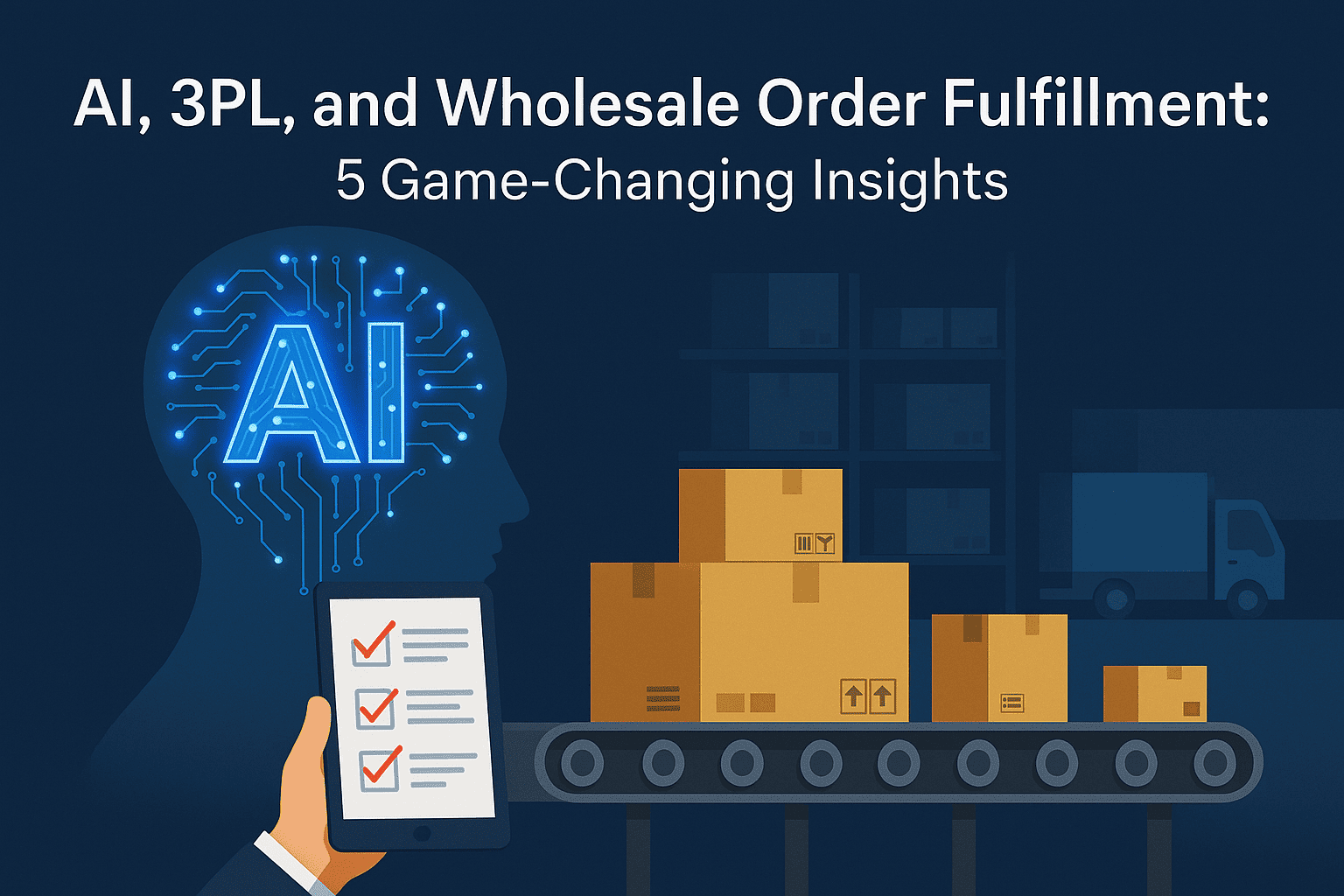
AI, 3PL, and Wholesale Order Fulfillment: 5 Game-Changing Insights
Wholesalers sit at the core of supply chains, connecting manufacturers with retail brands and end consumers. They enjoy diversified revenue streams by servicing multiple clients, making wholesale operations inherently scalable. They do, however, face a unique set of challenges. With rising transportation and warehousing costs putting pressure on profit margins and global supply chain disruptions adding further unpredictability, wholesalers must adapt in order to thrive. If you own or run a wholesale business that is ready to seize new opportunities, read on to discover how the combination of new technology and innovative ideas has become a necessity in this competitive industry. 1. Predictive Forecasting Managing demand is one of the greatest challenges in wholesale order fulfillment. Demand volatility and unexpected trend shifts can leave businesses scrambling frantically for solutions – often ending in costly overstocks or detrimental stock outs. Predictive demand forecasting is transforming this mammoth task by anticipating demand with impressive accuracy. These smart systems pull data from multiple sources and generate forecasts down to specific weeks leading up to holidays, allowing brands to plan inventory accordingly. 2. Fraud Detection From scam bulk orders to counterfeit products entering the supply chain, wholesalers are at risk, and even a single fraudulent transaction can result in massive financial losses and hinder growth. AI excels at analyzing data in real time, picking up unusual patterns or repeated small orders designed to test system vulnerabilities. Machine learning systems continuously adapt and learn, becoming smarter over time and improving their ability to detect even the most sophisticated fraud attempts. 3. Personalized 3PL Solutions No two wholesale businesses are the same. Some deal with agricultural surges tied to weather patterns, while others handle volatile retail fashion lines affected by seasonal trends. This diversity can only be addressed by personalized 3PL (third-party logistics) solutions, driven by artificial intelligence (AI). Customized 3PL fulfillment pricing is the best way to ensure that your business gets what it needs instead of standardized pricing models that force it to pay for services it won’t use. A tailored pricing structure gives wholesalers more control over margins so they can scale more effectively while maintaining service quality. 4. Cold Chain Compliance When dealing with perishable goods, such as pharmaceuticals or other temperature-specific products, cold chain compliance is critical. Any breach in temperature control can result in regulatory violations and lost product. Maintaining cold chain integrity used to require reactive inspections and manual monitoring. Modern cold chain compliance is transforming fulfillment with embedded sensors in containers and delivery vehicles. These high-tech sensors feed real-time temperature and humidity data into AI programs that effortlessly detect anomalies to facilitate immediate corrective action. 5. Enhanced Scalability One of the biggest benefits of integrating AI with 3PL partners is the increased ability to scale wholesale operations efficiently. Scalability is a long-standing challenge for wholesalers because demand can surge unexpectedly during peak seasons and then drop off at a moment’s notice with shifts in consumer demand. Scaling operations for surges used to require significant investments in warehouse space, staffing, and equipment. AI-driven solutions mitigate much of this burden by giving suppliers a flexible framework for growth and much-needed breathing room. To End Your business’s wholesale fulfillment strategy should make operations smarter, faster, and more effective. Now that you know better, your wholesale business can do better – strategically driving profitability and growth.

Wholesale DID: How Buying Numbers in Bulk Can Save Your Business Money
If your business needs a large volume of phone numbers, buying them individually can get expensive and complicated fast. That’s where wholesale DID (Direct Inward Dialing) comes in. By purchasing numbers in bulk, companies save money and gain flexibility, making it a smart move for many industries. To understand the basics, start by checking out Wholesale DID services. What Is Wholesale DID? Wholesale DID means buying a batch of phone numbers directly from providers, often at discounted rates. Instead of managing each number separately, you get a pool of numbers to use for your operations—ideal for call centers, telecom companies, or businesses that need multiple lines. Why Wholesale DID Makes Sense Cost Savings Buying in bulk lowers the price per number significantly. This reduces overall telecom expenses, especially if your business handles thousands of calls. Scalability and Flexibility Having a large pool of numbers means you can quickly assign them to new employees, campaigns, or regions without delay. Improved Customer Reach With multiple numbers available, you can set local numbers for different markets, making it easier and cheaper for customers to reach you. Simplified Management Managing numbers in bulk through a centralized system streamlines operations and reduces administrative hassle. Who Uses Wholesale DID? Call centers handling large volumes of inbound and outbound calls. Telecom companies reselling phone numbers. Businesses running multiple marketing campaigns requiring different numbers. Enterprises operating in several geographic areas needing local presence. How to Get Started with Wholesale DID First, assess your current and future number needs. Then, choose a reliable provider offering competitive prices and good support. Make sure their system integrates well with your existing telecom infrastructure. Pairing Wholesale DID with Other Services Combine Wholesale DID with SMS forwarding to manage not only voice calls but also text communications efficiently, all under one umbrella. Personal Insight I’ve seen businesses streamline their telecom expenses dramatically by switching to wholesale DID. It offers a clear path to grow communication capabilities without the headache of managing countless individual numbers. Tips for Managing Wholesale DID Keep an eye on number usage and recycle unused lines to save costs. Use automated tools for number assignment and tracking. Negotiate contracts carefully to get the best pricing and terms. Final Thoughts Wholesale DID offers a practical solution for businesses needing many phone numbers. It cuts costs, improves customer accessibility, and simplifies management—all key benefits for growing companies. Explore how Wholesale DID services can support your business communication needs today.

The 3 Steps To Take To Start A Union At Your Warehouse Job
Starting a union begins with recognizing that many workplaces focus on customer loyalty while forgetting something just as important which is employee loyalty. You might be expected to work long hours, stay silent about unfair treatment, or accept stagnant wages. Over time, that takes a toll. A union gives you and your co-workers the power to change your conditions. It creates a structure for speaking with one voice. Instead of asking for change, you are demanding it as a group. In this article, we will go over the steps to take to start a union for warehouse workers. 1 – Talk to your co-workers To start a union in your warehouse, you need more than just a few people who are frustrated. You need to start having real conversations with your co-workers. This step is quiet but important. It’s where the idea becomes action. Start by talking to people you already trust. Ask them how they feel about the work, the pace, the pay, or how management treats people. As you talk, you’ll begin to notice who others respect and listen to. These are people you want to keep close as things grow. Every warehouse shift has someone who keeps people calm or helps explain changes. You’ll need a strong foundation before anything goes public. What you’re doing now is learning how your workplace really runs. Not just by the rules, but by the routines and relationships that keep things moving. 2 – Build an organizing committee Once you’ve had enough conversations to see interest and support, it’s time to form an organizing committee. This group is the core of the effort. They help make decisions, spread information, and keep the plan moving. Without a solid committee, things fall apart fast. You need people from different parts of the warehouse. Each person on the committee should be ready to talk with others, answer questions, and listen to concerns. You don’t need experts. You need workers who are dependable and respected. This group will take on real tasks. That includes planning how to reach every part of the workplace, talking through the risks, and deciding the best time to go public. You also start mapping the warehouse. That means figuring out who talks to who, where influence lies, and which areas might need more attention. 3 – File a petition for a union election Once enough workers have signed cards and the petition is filed, the next step is the election. This is where the fight becomes public. The National Labor Relations Board will review the petition and, if everything checks out, will schedule a vote. The timing can vary, but most elections happen within a few weeks. During that window, management will likely try to turn people against the union. Expect meetings where they push fear, false claims, or sudden promises to fix things. Talk with your co-workers one by one. Remind them that it is illegal for the company to punish anyone for union activity. And remind them that the vote is private.

The 3 Best Strategies To Help Find A Good Shipping Partner
Choosing a shipping partner affects your profit, your timing, and how your customers think of you. A late package can mean a lost customer. Damaged goods can turn a good product into a refund. You don’t control every part of shipping, but you do choose who handles it for you. The biggest factor is finding someone who delivers on time, communicates clearly, and keeps up with your needs. That way, you stop worrying about logistics and focus on growth. 1 – Understand your shipping needs Before you pick a shipping partner, you need to understand your own needs. Start by looking at what you ship. Size, weight, and fragility all shape which services work best. A shirt isn’t a ceramic mug, and neither one moves like frozen goods. Your products shape the demands you place on a courier. Next, think about where you’re sending orders. Some couriers excel in rural areas while others focus on major cities. If you’re using couriers Texas businesses trust for fast state-wide delivery, you might not get the same results in the Midwest. Knowing your zones will help you sort out the right carriers early. Speed also matters. If your customers expect two-day shipping, you need a partner that can hit that mark without costing too much. If you ship in bulk once a week, reliability might outweigh speed. Understand the rhythm of your store so you can match it to the right logistics plan. 2 – Compare pricing structures Shipping costs can eat into your margins fast. That’s why you need to look beyond the base rate. Many couriers advertise low prices but then add fees for fuel, rural delivery, or residential drop-off. These extras pile up quickly and make it hard to predict your actual costs. Ask for clear rate sheets and sample invoices. If a provider won’t give them to you, move on. You need to see how they charge for different zones, weights, and delivery speeds. Surprises come from vague pricing, not from honest quotes. Volume discounts are another factor. Some carriers lower prices as your shipping total rises. Others require strict minimums or long-term contracts. Make sure the savings apply to how you already ship. A discount that doesn’t match your pattern won’t help you. 3 – Think about scalability Your shipping needs won’t stay the same forever. As your business grows, your partner has to keep up. That means flexibility. A courier that works today might hold you back six months from now if they can’t scale with you. You might run a sale that triples your volume for a week. Or you might expand into new regions. Your shipping partner should be able to handle these shifts without delays, added stress, or missed deliveries. Some carriers lock you into rigid terms. Others let you adjust as needed. Look for signs they can adapt—whether that’s offering quicker pickups, better packaging options, or tools that make it easier to switch gears when business changes. A good partner doesn’t need to offer everything.

The 3 Best Strategies To Save Money On Your 3PL Logistics
Third-party logistics can quietly drain your margins and slow your business’s growth. You may not notice it at first. Small fees stack up. Delays eat into customer satisfaction. Storage charges pile on as unsold stock sits. If you’re running an eCommerce store or shipping physical products, your 3PL provider has a direct line to your bottom line. You don’t need to overhaul your entire setup. You just need to know what levers to pull and when to pull them. In this article, we will go over some strategies to help you save some money on your 3PL logistics. 1 – Choose the right 3PL partner Choosing the right 3PL partner can make a large difference in how much you spend and what you get back. Many services look similar on the surface, but the gaps show up quickly once you’re paying monthly storage fees, chasing support tickets, or dealing with missed pickups. You need a provider that offers clarity, consistency, and real value. Ryder is a good example of what a full-service 3PL can deliver for the money. Unlike smaller operations that often rely on patchwork systems, Ryder provides access to nationwide warehousing, fast integration tools, and reliable service levels without constant add-on charges. Pick a 3PL that fits the scale of your operation but also gives you room to grow. A poor fit can lead to limits you didn’t expect. A good one saves you money without you constantly needing to fix what they break. Ryder tends to be one of the better bets if you want cost to match capability. 2 – Negotiate your current contract Most 3PL contracts are negotiable, even if the provider doesn’t say so. Rate cards might look fixed, but there’s often room to shift fees, especially as your volume grows. You don’t need to accept the first offer. You need to ask the right questions and be clear about what matters to your margins. Start by reviewing each charge in detail. If your order volume is steady or increasing, use that as leverage. Providers are more flexible with clients who bring predictable revenue. Ask for lower storage rates after a certain threshold. Push for discounts based on monthly shipments or seasonal spikes. Some providers try to lock you in with minimums that look harmless but grow costly fast. Watch for those. You don’t want to pay for warehouse space or order volume you’re not using. 3 – Use technology Technology can cut costs if you use it to remove friction. Many 3PLs offer software tools, but few businesses use them fully. If you want to save money, start by making your tech stack work harder. Your store should push order data to the 3PL system instantly. Delays in syncing can cause inventory mismatches and late shipments. If your platform and the 3PL’s warehouse system don’t connect smoothly, fix that first. Most established providers offer plug-and-play integrations. Look for ways to automate routine tasks. That includes shipment tracking, returns, and customer updates.